

Best Foods for Weight Loss During Provider-Guided Care

Updated: 5 days ago
What if the most helpful foods for weight management aren’t part of a strict diet, but simple building blocks you can adjust to fit your appetite and routine? It’s understandable to want a clear list of filling, nourishing choices, especially when changes in appetite or food tolerance make familiar meals feel different.
With provider-guided wellness support, food choices can stay flexible and personal. Lean proteins, fruits, vegetables, whole grains, and water can offer practical starting points, while smaller portions or simpler meals may feel more comfortable for some people. Individual needs vary, so nutrition questions and any digestive changes are worth discussing with a qualified provider.
This guide explores everyday foods and meal components you can mix and match, along with straightforward ways to build balanced meals without rigid rules. Dyvine Medical & Wellness offers weight-loss counseling and provider-guided wellness programs, providing structured support as you consider what fits your needs. Your body deserves care that is practical, respectful, and guided by the right support.
Table of Contents
How to choose supportive foods for weight loss during provider-guided care
Food planning can feel overwhelming when you want manageable ideas but don’t want another strict set of rules. A helpful starting point is choosing nourishing foods you enjoy, can access, and can adapt to your routine. No single food guarantees weight loss, and there isn’t one menu that suits everyone.
Supportive food choices can include familiar ingredients that fit your preferences and any guidance from the qualified professionals involved in your care. Think of general food ideas as a starting point for planning, not a personal nutrition prescription.
Practical guidance: Flexible ideas for building varied meals. These suggestions don’t replace nutrition advice tailored to your individual needs.
What makes a food choice practical and nourishing?
A practical choice combines nourishment, convenience, and enjoyment. That might mean eggs and toast on a busy morning, beans stirred into a familiar soup, or frozen vegetables alongside dinner. There’s no ideal menu to follow, and meals can look different from one day to the next.
Consider variety across food groups instead of focusing on a single “perfect” ingredient. Proteins, produce, and grains or other starches can be mixed and matched to suit your meals. Fresh, frozen, and canned ingredients may all be useful. What works depends on your routine and preferences, not a universal list of good, bad, or mandatory foods.
How should individual needs shape food choices?
Preferences, health needs, budget, culture, and daily schedules differ. Individual guidance can differ, too. Begin with options that feel appealing and manageable, and discuss questions about your food choices with your care team. If changes in appetite or food tolerance make eating difficult, share what you’re experiencing rather than relying on general online suggestions alone.
Dyvine Medical & Wellness offers weight-loss counseling and provider-guided wellness programs, with support focused on coordination and education. Learn more about weight-loss counseling and speak with an appropriate qualified professional about nutrition guidance for your circumstances.
Protein-rich foods that can make everyday meals more satisfying
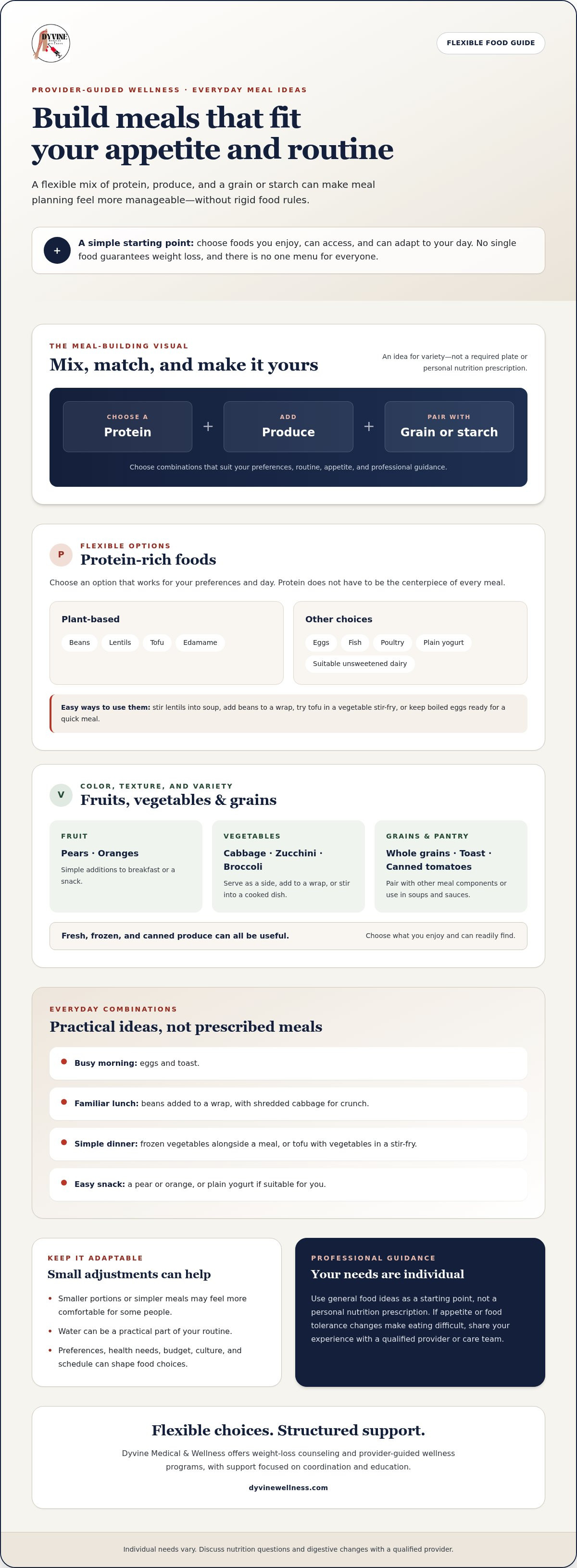
Protein can be one adaptable part of a meal, without setting a required amount or making it the centerpiece of every plate. Choose options that suit your preferences, schedule, and any guidance from your care team. Simple preparations, such as keeping cooked lentils or boiled eggs ready, can make it easier to add variety when time is limited.
Plant-based protein options for flexible meals
Beans, lentils, tofu, and edamame can fit into familiar dishes. Blend lentils into a soup, add beans to a wrap, or use tofu in a vegetable stir-fry. If you prefer a softer texture, mashed beans can work as a spread or bowl topping. Allergies, preferences, and personal tolerance all matter, so choose what feels suitable for you.
Animal-based choices and easy meal combinations
Eggs, fish, poultry, and suitable unsweetened dairy, such as plain yogurt, offer other flexible options. Try yogurt as a base for a savory dip, add leftover poultry to a salad, or prepare eggs ahead for a quick meal. These are examples, not a prescribed eating plan. You can adjust ingredients to match your appetite and household routine.
In short: Beans, lentils, tofu, edamame, eggs, fish, poultry, and suitable unsweetened dairy are protein-rich options to consider according to your preferences and professional guidance.
Dyvine Medical & Wellness offers weight-loss counseling and provider-guided wellness programs. Explore weight-loss counseling to learn about available support.
Fruits, vegetables, and fiber-rich foods for variety and balance
Produce and whole grains can bring different flavors and textures to meals without requiring a complicated plan. If you’re building on the protein choices discussed earlier, consider adding produce or a grain that complements the meal. The examples below offer practical inspiration, not a required shopping list. Choose what you enjoy and can readily find.
Easy fruits and vegetables to keep on hand
Pears or oranges can be easy additions to breakfast or a snack. Shredded cabbage can add crunch to a wrap, while zucchini or broccoli can be served as a side or stirred into a cooked dish. Canned tomatoes are a useful pantry ingredient for sauces and soups. Fresh, frozen, and canned options can all make meal planning more adaptable.
Whole grains and other fiber-containing choices
Barley, quinoa, and whole-grain bread are additional ways to bring variety to meals. For example, cooked barley can be added to soup, quinoa can accompany roasted vegetables, and whole-grain bread can serve as a base for a simple meal. These are options to consider, not foods you must include or a plan that fits everyone.
Introduce unfamiliar foods at a pace that feels comfortable, and follow any individual guidance you’ve received. If digestive concerns continue or affect your eating, discuss them with an appropriate provider. For people seeking structured wellness support, Dyvine Medical & Wellness offers weight-loss counseling and provider-guided wellness programs. Learn more about weight-loss support.
Build simple meals and snacks without rigid food rules
A flexible meal routine can make everyday food decisions feel more manageable. Rather than following a fixed menu, use a simple sequence and adjust it to your appetite, schedule, and household preferences.
A flexible formula for quick meals
Choose a protein, add produce, then select a grain or starch you enjoy. This is a meal-building prompt, not a required plate format or portion prescription. Swap ingredients based on what’s available, appealing, and appropriate for your needs.
Breakfast: Try an egg with sautéed spinach and a slice of toast, or choose a different combination that suits your morning.
Lunch: Build a bowl with chicken, roasted vegetables, and rice. Use leftovers or ingredients you already have.
Dinner: Pair baked fish with green beans and potatoes, adjusting the ingredients to suit your preferences.
Snack: Combine plain yogurt with fruit, or choose another convenient option that feels comfortable.
Preparation can be simple. Cook a few versatile ingredients ahead, wash produce when you bring it home, or keep convenient options such as cooked grains and ready-to-use vegetables available. These small steps can reduce the effort of assembling a meal on a busy day. You don’t need to prepare everything in advance; even one useful ingredient can make the next choice easier.
What if appetite or food tolerance changes?
Your appetite and comfort with different foods may vary. Notice what you ate, how you felt, and whether any patterns seem to repeat. That record isn’t a diagnosis, but it can help you describe your experience clearly to your care team.
If you’re finding it difficult to eat or drink consistently, or the concern continues, contact your care team for individualized guidance. Don’t change a care plan or rely on food substitutions in place of professional support. Food ideas are tools for everyday planning, not a replacement for advice tailored to your circumstances.
Dyvine Medical & Wellness offers weight-loss counseling and provider-guided wellness programs, with support centered on coordination and practical guidance. If structured support would help you work through food-planning questions, explore weight-loss counseling.
Plan your next steps with practical support and professional guidance
A useful plan doesn’t need to account for every meal in advance. A short grocery check can help you keep nourishing options available while leaving room to adjust based on appetite, preferences, and professional guidance.
A simple checklist for the week ahead
Before shopping, take a moment to consider what you already have and what would make meals easier. Use this checklist as a starting point, not a strict menu:
Choose a few protein foods you enjoy, such as eggs, beans, tofu, fish, or poultry.
Pick produce you’re likely to use, including fresh, frozen, or canned options that suit your preferences and availability.
Include convenient meal components such as oats, rice, potatoes, or whole-grain bread.
Think in flexible combinations rather than creating a rigid schedule or a list of foods to eliminate.
Leave room to adapt if your needs, appetite, or routine change, and follow any individual guidance you’ve received.
You might also note which ingredients are easy to prepare and which meals feel comfortable. That information can help you make practical adjustments without turning planning into another source of pressure.
When to seek individualized guidance
If eating or drinking feels difficult, or food-related concerns persist or feel worrying, bring them to the appropriate care team. Sharing what you’ve noticed, your food preferences, and the changes that feel challenging can help make the conversation more specific. General food lists can offer ideas, but they can’t replace guidance based on your individual circumstances.
A supportive plan should make space for your questions. Dyvine Medical & Wellness offers weight-loss counseling and provider-guided wellness programs, with professional support and coordination. To explore whether its services fit your needs, learn more about weight-loss counseling and wellness support.
Carry practical food choices forward with support
Nourishing meals don’t require a rigid menu. A flexible mix of protein, produce, and a preferred grain or starch can offer a practical starting point, while fresh, frozen, and pantry ingredients make it easier to adapt meals to your routine. The best foods are the ones that suit your preferences and align with guidance from your care team.
If you’re searching for the best foods for weight loss on tirzepatide, use general food ideas as a conversation starter, not a personal prescription. Individual needs differ. Share ongoing eating concerns, food preferences, and changes in appetite or tolerance with an appropriate provider.
Dyvine Medical & Wellness offers weight-loss counseling and provider-guided wellness programs, with professional support in Stockbridge and communities across Georgia. Explore Dyvine Medical & Wellness weight-loss support to learn more about its services.
Small, adaptable steps count. With practical planning and the right professional guidance, you can make food choices with greater clarity and care.
Frequently Asked Questions
What are some filling foods to include in a weight-loss meal?
Meals combining a protein food with produce and a grain or starch can offer variety and make meal planning more satisfying for some people. For example, pair lentils with vegetables and rice, or eggs with spinach and toast. Beans, fish, tofu, oats, berries, and vegetables are other adaptable choices. Select foods you enjoy and can comfortably include, and ask your care team about individual nutrition needs.
Are eggs a useful food choice during a weight-loss journey?
Eggs can be one convenient protein option during a weight-management journey, if they suit your preferences and needs. Try them with spinach and toast, or add a cooked egg to a vegetable bowl. They’re not essential, though. Beans, lentils, tofu, fish, and poultry are other options to consider. A balanced approach leaves room for different foods rather than making one ingredient a requirement.
Which fruits and vegetables are easy to include in everyday meals?
Apples and berries can work as snacks or breakfast additions, while leafy greens and carrots can be added to salads, wraps, soups, or served as sides. Fresh, frozen, and canned vegetables can all be useful, depending on availability and convenience. Choose the forms and varieties you enjoy. Keeping a few ready-to-use options on hand can make it easier to add produce to familiar meals.
How can I build a balanced meal when my appetite is low?
Choose a combination that feels manageable, such as yogurt with berries and oats, or a small serving of soup with beans and vegetables. There’s no single portion or plate format that suits everyone, so avoid forcing a rigid meal plan. If reduced appetite makes it difficult to eat enough or affects your routine, share your experience with your care team for guidance tailored to you.
Should I avoid certain foods while receiving provider-guided weight-loss care?
There isn’t one universal list of foods everyone must avoid during provider-guided weight-loss care. Preferences, health needs, and individual guidance can differ. Rather than labeling foods as universally good or bad, notice what feels comfortable and works with your routine. If a food seems to cause ongoing difficulty or you’re unsure what changes are appropriate, discuss it with the qualified professionals involved in your care.
How much protein should I eat for weight loss?
There isn’t one protein target that’s right for everyone. Your individual needs may depend on personal circumstances, so ask an appropriate provider or qualified nutrition professional for guidance rather than relying on a general number. Foods such as eggs, beans, lentils, tofu, fish, and poultry can be flexible meal components. The phrase best foods for weight loss on tirzepatide can guide a search, but it isn’t a personalized nutrition plan.
When should I ask a provider about difficulty eating or drinking?
Contact your care team if difficulty eating or drinking persists, feels concerning, or makes it hard to maintain your usual routine. Describe what you’ve noticed and any patterns you’ve observed; don’t change a care plan based on general food advice. Dyvine Medical & Wellness offers weight-loss counseling and provider-guided wellness programs in Stockbridge and across Georgia, including Atlanta, McDonough, Jonesboro, Decatur, Covington, Conyers, Jackson, Macon, Columbus, Lawrenceville, Snellville, Buford, Sugar Hill, Griffin, Senoia, Peachtree City, and Fayetteville.


Comments