

What If My Partner Won’t Agree to a DNA Test? Your Options and Next Steps

What if my partner won't agree to a DNA test? A refusal can feel unsettling, especially when you’re seeking clarity about parentage, but it doesn’t prove what your partner is thinking or why they said no. Pressure and assumptions can deepen the strain, while a calm conversation may help you understand the concern and explain what you hope testing will resolve.
You deserve clear information and a next step that respects everyone’s consent. This guide explores how to discuss a refusal, what options may be available, and why the purpose of testing matters. Personal, non-legal DNA testing and legal DNA paternity testing follow different pathways, so choosing between them depends on what you need the results for. Dyvine Medical & Wellness offers both testing options, with professional specimen collection services in Stockbridge and communities across Georgia. We’ll help you consider privacy, consent, and when legal guidance may be appropriate, without treating a refusal as proof or pushing you toward a decision before you’re ready.
Table of Contents
What a partner’s refusal to take a DNA test can, and cannot, tell you
A partner’s refusal can stir fear, distrust, or concern about what may change in your family. Those feelings are understandable, but the decision not to participate doesn’t reveal a person’s motive or establish biological parentage.
A refusal is a choice, not a DNA result. A test examines genetic information; a conversation cannot substitute for that evidence. The DNA paternity testing overview provides background on testing methods and related considerations.
Why a partner might hesitate
Possible concerns include privacy, emotional impact, changes to family relationships, or uncertainty about the process. These are examples, not explanations of your partner’s behavior. Ask what’s behind their hesitation and listen before deciding what it means.
What the refusal does not prove
Willingness or unwillingness alone does not establish whether someone is biologically related to a child. Relationship concerns may need attention, but they are distinct from evidence a DNA test may provide.
If you’re asking what if my partner won't agree to a DNA test, resist treating suspicion as proof. Pressure or secret sample collection can raise concerns about consent and privacy without resolving uncertainty responsibly. If you’re ready to explore professional testing, Dyvine Medical & Wellness offers DNA paternity testing services.
What options remain when your partner will not participate?
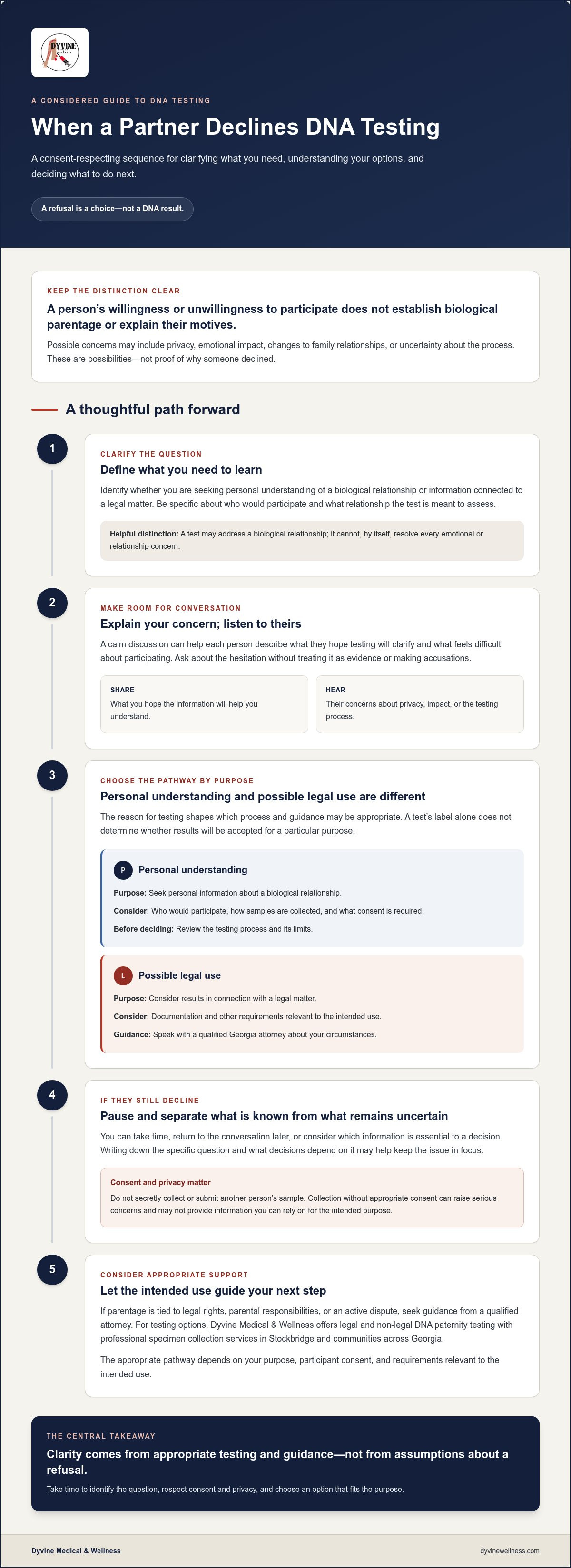
A refusal doesn’t leave you with only one path. The next step depends on what you need to learn, who would take part, and the consent requirements that apply. Before making a decision, clarify the purpose: are you seeking personal understanding, or do you need information connected to a legal matter? Those aims can call for different testing pathways and different kinds of guidance.
You can pause, revisit the conversation, or seek qualified legal advice if parentage is tied to rights, responsibilities, or an active dispute. There’s no need to make a rushed decision. A deliberate choice can help you protect your boundaries while keeping the question you need answered in focus.
If your goal is personal clarity
Voluntary testing may be an option when the relevant participants agree and applicable requirements are met. First, identify who would participate and what relationship you want the test to assess. For example, clarify whether the question concerns a child’s biological relationship to a possible parent, rather than a broader concern about trust or family dynamics. Dyvine Medical & Wellness offers legal and non-legal DNA paternity testing, and the appropriate pathway depends on your purpose.
Reviewing DNA paternity testing services can help you understand the professional testing options available through Dyvine. Consider what you would do with the information, too. A test may address a biological relationship; it cannot by itself resolve every emotional or relationship question surrounding the situation.
If the other person still declines
If your partner continues to say no, give yourself room to consider what information is essential before taking further steps. You might write down the specific question you’re trying to answer, what decisions depend on it, and what remains uncertain. This can help separate a need for testing from the understandable wish for reassurance or a more open conversation.
Do not secretly collect or submit another person’s sample as a workaround. Collection without appropriate consent can raise serious concerns and may not produce information you can rely on for your intended purpose. Instead, keep your choices lawful and consent-respecting. If the issue involves legal rights, parental responsibilities, or a dispute, seek guidance from a qualified attorney who can advise you about your circumstances.
If you’re considering what if my partner won't agree to a DNA test, remember that choosing to wait is also a choice. You can return to the discussion later, ask what concerns your partner has, or decide that legal guidance should come first. When you’re ready to explore professional testing, Dyvine’s legal and non-legal services offer options to consider based on your reason for testing. Take the next step with clear questions and without relying on secrecy or assumptions.
Personal DNA testing or legal testing: how the purpose changes the path
The first question is not simply whether to test, but what you need the information to do. Personal understanding and a legal matter can involve different processes. A test’s label alone doesn’t determine whether its results will be accepted for a particular purpose. If the results may affect a legal decision, get advice about your situation before relying on them.
When the goal is private understanding
Non-legal DNA paternity testing is a category intended for personal information, not a guarantee that results can be used in a court or other legal setting. Before proceeding, clarify who would participate, what relationship you want to assess, and how collection and consent are handled. This helps align the test with your question without confusing personal testing with a court process or legal determination.
Dyvine Medical & Wellness offers legal and non-legal DNA paternity testing. You can review DNA paternity testing options to understand the service pathways. The right choice depends on your reason for testing; neither category is automatically suitable for every circumstance.
When results may affect a legal matter
If the results could relate to parental rights, responsibilities, or a dispute, speak with a qualified Georgia attorney before choosing a test or relying on results. Legal acceptance depends on requirements relevant to the specific proceeding and purpose. Because those requirements may be state-specific and can change, confirm current Georgia details through authoritative legal sources and counsel rather than assuming a particular test will be accepted.
This distinction matters especially if you’re asking what if my partner won't agree to a DNA test and believe the question may become part of a legal matter. A professional testing service can explain its testing options, but it can’t replace legal advice about your rights or the effect of a result. For related local context, seek guidance specific to your circumstances in Georgia, then choose a testing pathway that fits the purpose and applicable requirements.
How to raise the subject without turning the conversation into pressure
A conversation about DNA testing can feel loaded before either person says a word. You may be carrying uncertainty; your partner may have concerns you don’t yet understand. The aim isn’t to secure an immediate yes. It’s to explain what you need, hear their perspective, and decide whether there’s a respectful way to continue talking.
Choose a time when you can speak without rushing or an audience. Keep the conversation focused on your concern, rather than trying to prove what your partner’s response means. A simple sequence can help:
Choose a calm moment. Avoid raising the subject during an argument or when either of you is pressed for time.
State your concern using “I” language. Explain that you’re seeking clarity, without accusing your partner of wrongdoing.
Ask about their concerns. Invite them to share whether privacy, timing, family relationships, or the emotional impact is on their mind.
Pause and listen. Let them answer without demanding a decision on the spot. Agree on whether and when to revisit the conversation.
A calm way to start the conversation
You might say: “I’ve been feeling uncertain, and I’d like to talk about whether DNA testing could help answer a question for me. I’m not trying to accuse you. Would you tell me what concerns you have about discussing it?” This wording names your need while leaving room for your partner’s perspective. Then listen. Clarify what you heard, and discuss boundaries such as whether to continue now, take time, or revisit the subject later.
Keep the conversation specific. If your concern is about parentage, say so plainly; if you’re unsure what you want to do with the information, be honest about that, too. You don’t need to persuade your partner before you’ve both had a chance to understand the question. Nor does a respectful discussion require you to abandon your own need for clarity.
When a conversation needs more support
If both of you want help communicating, a neutral counselor or mediator may offer a structured setting to talk through concerns. That support is optional, and it doesn’t replace advice from a qualified attorney if legal rights or responsibilities are involved. If either person feels overwhelmed, pause rather than pushing through. If you feel unsafe, prioritize your safety and seek appropriate support before restarting the discussion.
If you’re asking what if my partner won't agree to a DNA test, a calm conversation can help clarify what each person is ready to discuss, even if it doesn’t settle the question immediately. When you’re ready to understand the testing pathways, explore DNA testing information from Dyvine Medical & Wellness and consider which option aligns with your purpose.
How Dyvine Medical & Wellness can support a considered next step
After considering your options, you may want clear information about professional testing before deciding whether to proceed. Dyvine Medical & Wellness offers legal and non-legal DNA paternity testing. These are testing options, not guaranteed solutions to disagreement or relationship strain. The first step is understanding what you want the test to address and whether the service pathway fits that purpose.
If you’re still weighing what if my partner won't agree to a DNA test, you don’t have to turn uncertainty into an immediate decision. You can gather information, consider who would participate, and reflect on what you intend to do with the results. Choosing to wait while you clarify those points is a considered step, too.
Choose the next step that fits your purpose
Start by identifying whether you’re seeking personal understanding or have a question connected to a legal matter. If legal rights, responsibilities, or a dispute are involved, speak with a qualified Georgia attorney about your circumstances before relying on a test. Dyvine provides testing services, not legal advice or legal determinations.
Before making an appointment, it may help to note the questions you want answered:
What biological relationship are you seeking information about?
Who would need to participate, and what consent considerations apply?
Is the result intended for personal information, or could it relate to a legal matter?
These questions can help you approach the decision with greater clarity. Participation should be informed and voluntary, and a testing option should be chosen for the purpose you have in mind.
Access DNA paternity testing in the Stockbridge area
Dyvine Medical & Wellness serves Stockbridge and communities across Georgia with legal and non-legal DNA paternity testing. Considering each option in relation to your purpose can help you make an informed choice. Professional service can support the testing process, but it can’t guarantee a particular result or resolve a conflict between partners.
For a legal question, get guidance from a qualified Georgia attorney; for testing information, review the available service details and decide whether you’re ready to proceed. You can take this at your own pace. If an appointment feels like the appropriate next step, book an appointment with Dyvine Medical & Wellness when you’re ready.
Choose your next step with care
If you’re still asking, what if my partner won't agree to a DNA test, allow yourself to move forward thoughtfully rather than reacting from fear. You can decide what information you need, whether a conversation is possible, and whether professional or legal guidance belongs in your next step. You don’t have to settle every relationship question today.
If testing feels appropriate, Dyvine Medical & Wellness offers legal and non-legal DNA paternity testing. The right option depends on your purpose, and legal questions are best discussed with a qualified Georgia attorney. A considered choice starts with clear information and respect for everyone involved.
When you feel ready to take the next step, book a DNA paternity testing appointment. Move at a pace that feels grounded and informed. Clarity begins with choosing your next step with care.
Frequently Asked Questions
Can a DNA test be done without my partner’s consent?
Whether testing can proceed depends on who would be tested, the purpose, and applicable consent requirements. A sample from one person alone may not answer a question about another person’s biological relationship. Before arranging testing, explain who would participate and why, then review the testing provider’s consent requirements. If there’s a disagreement about consent or a legal dispute, seek qualified legal guidance before taking action.
What if my partner refuses but I still want to know whether I am the biological parent?
If your partner declines, consider what relationship you need to assess and whether the relevant participants are willing to take part. Testing with only your sample may not answer whether you are a child’s biological parent. You could pause to consider what information you need and whether it may affect legal rights or responsibilities. If so, consult a qualified Georgia attorney about your circumstances.
Can a court order a DNA test in Georgia?
Whether a court can order genetic testing depends on the specific case and current Georgia law. Don’t rely on a general article to determine what a court may do in your situation. If you’re involved in a paternity matter, have received court documents, or are considering legal action, speak with a qualified Georgia attorney. They can explain the applicable procedures and help you understand your options.
Is a non-legal DNA test enough for a court case?
Don’t assume a test intended for personal information will meet the requirements of a court case. The process and documentation required can depend on the legal matter and applicable rules. Before arranging testing for possible legal use, ask a qualified Georgia attorney what process is appropriate and whether a test you’re considering may serve your intended purpose. That guidance can help you avoid relying on results that may not be accepted.
Can I use a child’s DNA sample if the other parent disagrees?
Before using a child’s sample, clarify who has authority to consent and what requirements apply to your circumstances. A disagreement between parents can make the question more complex, so don’t try to bypass it by collecting or submitting a sample secretly. If the test may relate to a legal dispute, consult a qualified Georgia attorney before proceeding. This helps you consider the child’s interests and applicable consent rules.
Should I interpret my partner’s refusal as proof they are hiding something?
No. A person’s decision not to participate doesn’t establish why they declined or what a DNA test would show. If you feel able to talk, ask what concerns them and give them space to answer. You can acknowledge your own need for clarity without treating a suspicion as evidence. If the conversation becomes overwhelming, pausing and returning to it later may be more constructive than demanding an immediate response.


Comments