

Can a Home Paternity Test Be Used in Court? What Georgia Families Should Know

What if a paternity test gives you an answer, but not one the court can rely on? It’s understandable to wonder, “can a home paternity test be used in court,” especially when you want clarity without repeating the process. In Georgia, a home kit may offer personal insight, but it may not include the documented collection and identity checks needed for court-related testing.
The difference is not just the DNA analysis. It is also how participants’ identities are verified, how samples are collected and handled, and what records are kept. This guide explains what to ask before arranging a legal test and why a court or child-support agency may have its own requirements. Dyvine Medical & Wellness offers legal and non-legal DNA paternity testing in Georgia. Before testing, clarify which type may fit your purpose, and consult the relevant court or a qualified legal professional about requirements for your specific case.
Table of Contents
Can a Home Paternity Test Be Used in Court in Georgia?
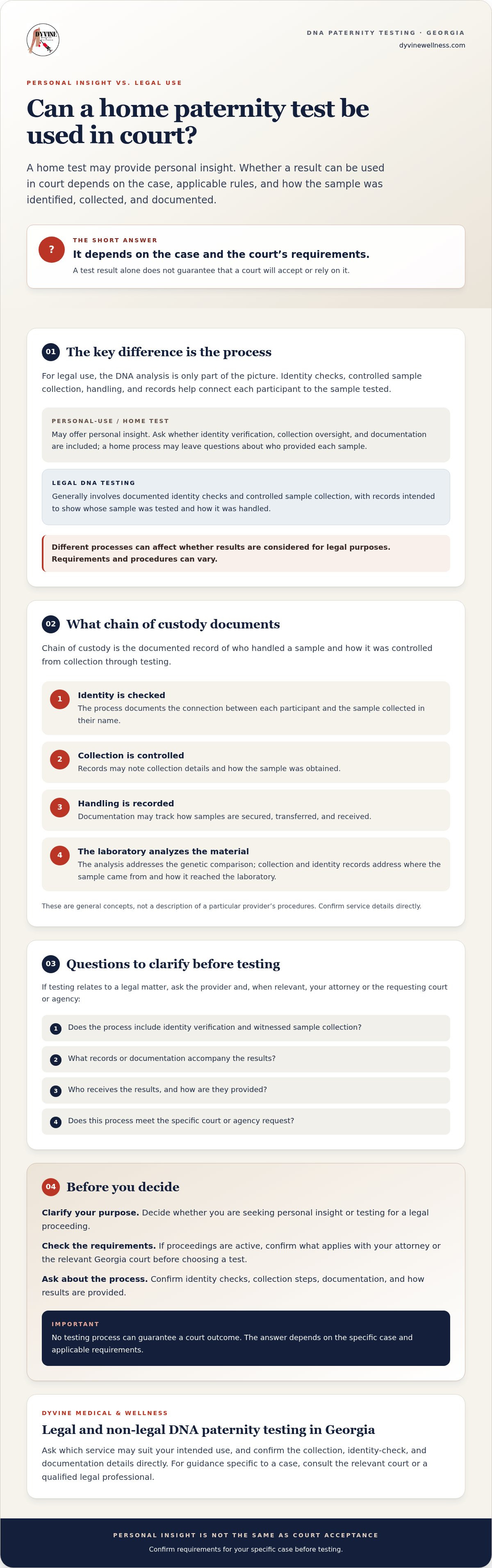
A home paternity test may provide personal insight, but it may not meet a court’s evidence requirements. If you’re asking, “can a home paternity test be used in court,” the answer depends on the case and applicable court rules. A test result alone does not guarantee that a court will accept or rely on it.
For legal proceedings, the process matters alongside the DNA analysis. A court may consider how participants’ identities were confirmed, how samples were collected, and what records were maintained. The DNA paternity testing overview provides general background, but it cannot tell you what a particular Georgia court requires.
This video offers a general introduction to court-ordered DNA testing. Confirm any steps relevant to your case with an attorney or the court.
What does a court-usable paternity test generally involve?
Legal testing generally involves documented identity checks and controlled sample collection. The records are intended to connect each participant with their sample and show how it was handled through testing. Procedures and requirements can vary, so ask your attorney or the court what applies to your case before choosing a test.
Why might an at-home result be questioned?
A home test may leave questions about who collected each sample and whether participants’ identities were verified. That uncertainty can limit its usefulness in a legal proceeding, even if the result provides personal information. Dyvine Medical & Wellness offers legal and non-legal DNA paternity testing in Georgia. Ask which service may fit your intended use and confirm the process directly. For case-specific guidance, consult your attorney or the relevant court.
How Collection, Identity Checks, and Chain of Custody Affect Results
A DNA result addresses a biological question, but legal use may also depend on whether the process connects each sample to the person it represents. Collection records and identity checks help document that connection. They distinguish the laboratory’s analysis from the steps taken before the sample reached the laboratory.
What is chain of custody in DNA testing?
Chain of custody is the documented record of who handled a sample and how it was controlled from collection through testing. Depending on the provider and process, records may identify participants, note collection details, and document how samples are secured, transferred, and received. These are general concepts, not a description of any particular provider’s procedures. Confirm the details directly before testing, since processes vary.
Documented collection helps show whose sample was tested and how it was handled along the way. Identity verification supports that record by connecting a participant with the sample collected in their name. Without clear documentation, someone may question whether a sample came from the person identified in the report.
Why separate the DNA analysis from the collection process?
The laboratory analyzes the submitted biological material. Collection and identity procedures document where that material came from and how it reached the laboratory. A test result may describe the genetic comparison, but the report alone may not answer questions about sample identity or handling. This distinction matters when considering whether can a home paternity test be used in court applies to your situation. The answer depends on the case and its requirements, not only on the analysis.
What should you ask before choosing a test?
Before arranging testing for a legal matter, ask the provider and, if relevant, your attorney or the requesting court or agency:
Does the legal testing process include identity verification and witnessed sample collection?
What records or documentation accompany the results?
Who receives the results, and how are they provided?
Does this process meet the specific court or agency request?
Ask Dyvine directly about the identity checks, collection steps, and documentation for the service you are considering. No testing process can guarantee a court outcome. To discuss which option may fit your intended purpose, review DNA paternity testing services.
Home Paternity Tests vs. Legal DNA Tests: What Is the Difference?
The main difference is the test’s intended purpose and how samples are collected and documented. A personal-use test may help answer a private question. Legal DNA testing is intended to provide documented evidence for review in a legal or agency process. Neither option should be chosen on the assumption that a result will automatically be accepted in court.
This comparison is general. It does not guarantee how a provider’s service works or how a court will treat a result. For more context, see the related article, Legal vs. Non-Legal Paternity Tests: What’s the Difference?
When might a home test be enough for personal knowledge?
If your goal is private information, a personal-use test may be an option to explore. Before proceeding, review the provider’s instructions, consent requirements, and privacy terms, including how samples and results are handled. A personal result may not replace a process requested by a court or agency. If you are unsure, clarify your intended use before collecting samples.
When should you ask about legal DNA testing?
Ask about legal testing if an attorney, court, or agency has requested documented testing, or if you may need results for a legal process. Confirm requirements with the requesting party before choosing a service or submitting samples. If you’re asking, “can a home paternity test be used in court,” verify the requirements for your specific case rather than assuming a home result will be sufficient.
Ask which option may fit your intended purpose and confirm the collection and documentation details directly. Explore legal DNA paternity testing information. For background on the distinction between testing purposes, look for the article titled Legal vs. Non-Legal Paternity Tests: What’s the Diff?
Before Using a Home Paternity Test in Georgia
Before ordering a kit or collecting a sample, clarify what you need the test to do. If you’re asking, “can a home paternity test be used in court,” do not base a decision about your case on a general answer. Requirements can depend on the proceeding and the court or agency involved.
Use this sequence to choose a practical next step:
Identify the purpose. Decide whether you’re seeking private information or testing for a legal or agency matter.
Check the instructions. Review the kit or service details, including consent, sample collection, privacy, and how results are provided.
Confirm requirements. If a case is active or testing has been requested, ask your attorney or the relevant Georgia court or agency what process and documentation are needed.
Choose a provider. Select a service that fits the intended purpose, and clarify its process before anyone provides a sample.
Questions to ask a Georgia court or attorney
If you’re involved in a proceeding, ask whether a specific collection method or documentation is required. If you already have a home-test result, ask whether it can be considered or whether additional testing may be needed. These are useful questions to raise, not legal advice about how a specific case will be decided. The court or a qualified attorney can address your circumstances.
Questions to ask a testing provider
Before scheduling, confirm whether you’re selecting a legal or non-legal test. Ask how the provider verifies identities, handles samples, documents the process, and delivers results. Compare those answers with any instructions from the court, agency, or attorney. Getting clear answers before collection can help you avoid choosing a service that does not match your intended use.
Ask Dyvine directly about identity verification and sample handling for the option you’re considering. Also confirm whether service is available in your community, including Stockbridge, Atlanta, or another Georgia location, rather than assuming coverage.
For an active case, confirm requirements with the relevant court or your attorney before testing. To ask Dyvine which service may fit your intended purpose, visit its DNA paternity testing page.
How Dyvine Medical & Wellness Can Help You Explore Legal Paternity Testing
Questions about paternity can carry personal and practical weight. A useful first step is to match the type of testing to your purpose, then confirm the process before anyone provides a sample. Dyvine Medical & Wellness offers both legal and non-legal DNA paternity testing in Georgia, serving Stockbridge and other listed communities.
If you’re still wondering, “can a home paternity test be used in court,” remember that a testing provider can explain its services but cannot promise how a court will treat a result. Explain whether you’re seeking private information or responding to a court, agency, or attorney request. That context can help Dyvine clarify which service may fit your intended use.
What to clarify with Dyvine before booking
Ask what collection and documentation steps apply to the legal testing service, including how identities and samples are handled. Confirm whether the service is available in your community and how appointments are arranged. Verify these details directly with Dyvine before scheduling. If you have an active case, confirm the court’s requirements separately with your attorney or the relevant court.
Choose a clear next step
You do not need to have every answer before asking a question. A simple description of your intended use can start a practical conversation while respecting your family’s privacy. Dyvine can clarify its legal and non-legal options and explain what details to confirm before moving forward. Verify any court-specific requirements with the appropriate legal source.
For broader background on DNA testing and to explore Dyvine’s service information for Stockbridge and other Georgia communities, visit the DNA testing services page. All medical services are provided in accordance with applicable regulations. Dyvine Medical & Wellness provides specimen collection, education, and coordination services. A thoughtful next step begins with clear questions and information you can verify.
Take the Next Step With Clarity
A home paternity test may offer personal insight, but whether its results can be considered in court depends on the case and applicable requirements. Documented identity checks, sample handling, and collection procedures may matter as much as the DNA analysis. Before testing, clarify your purpose and confirm court-specific requirements with your attorney or the relevant Georgia court.
If you’re still asking, “can a home paternity test be used in court,” do not assume a personal-use result will meet legal needs. Share your intended use and ask which service may fit and what process applies. Dyvine serves communities including Stockbridge, Atlanta, McDonough, Jonesboro, Decatur, Covington, Conyers, Jackson, Macon, Columbus, Lawrenceville, Snellville, Buford, Sugar Hill, Griffin, Senoia, Peachtree City, and Fayetteville. Confirm local availability and appointment arrangements directly.
To take the next step, explore DNA testing services and contact Dyvine with your questions before scheduling. Confirm any court-specific requirements with the relevant court or your attorney.
Frequently Asked Questions
Is an at-home paternity test legally admissible?
Not automatically. Whether a court considers a test can depend on the case, applicable rules, and how samples were collected and documented. A home result may provide personal information, but it may not establish who provided each sample or how it was handled. If you need testing for a legal matter, confirm the requirements with your attorney or the court before choosing a test.
What is the difference between a legal and non-legal paternity test?
A non-legal paternity test is generally intended for personal information, while legal testing is intended for a process that may require documented collection and identity checks. Procedures vary by provider, so do not rely on the label alone. Ask what identity verification, sample handling, and result documentation are included, then check whether the process fits any court or agency request.
Can I use a home DNA test for a child support case?
A home DNA test may not satisfy the requirements of a child support case. The appropriate process can depend on the agency, court, and circumstances involved. Before ordering a kit or submitting a home result, contact the agency handling the matter, the relevant Georgia court, or your attorney to ask what testing and documentation are required. This general information is not legal advice for an individual case.
How does chain of custody work in a paternity test?
Chain of custody is a documented record of who controlled a sample and how it was handled during testing. Records may connect a participant’s identity to their sample and document handling or transfer. Steps vary by provider. If testing is intended for legal use, ask what records are created and confirm whether they meet the requirements of the relevant court or agency.
Do both parents have to agree to a paternity test?
There is no single answer that applies to every situation. Consent requirements may depend on who is being tested, who has authority to consent, and whether a court or agency is involved. Do not assume that one parent’s agreement is enough or that disagreement prevents testing. If there is an active case or a child will be tested, ask an attorney or the relevant court what applies to your circumstances.
Where can I get legal paternity testing near Stockbridge, Georgia?
Dyvine Medical & Wellness offers legal and non-legal DNA paternity testing in Georgia and serves Stockbridge and other communities, including Atlanta, McDonough, Jonesboro, Decatur, Covington, Conyers, Jackson, Macon, Columbus, Lawrenceville, Snellville, Buford, Sugar Hill, Griffin, Senoia, Peachtree City, and Fayetteville. Confirm local availability and appointment arrangements directly with Dyvine, and verify any court-specific requirements separately before booking.


Comments