

Life After Losing Weight With Semaglutide: A Practical Maintenance Guide

Updated: 4 days ago
What does it take to maintain progress while building routines for the life you have now? Life after losing weight with semaglutide can bring pride alongside questions about what comes next. If you’re unsure how to sustain your progress or what support may help, that uncertainty is understandable.
Maintenance isn’t a finish line, and there’s no single approach for everyone. Your routines, priorities, and needs may change over time.
This guide covers practical habits, ways to compare support options, and questions to raise with a qualified healthcare professional. Dyvine Medical & Wellness offers weight-loss counseling and medical weight-loss programs. Ask about the scope of the support available to decide whether it may suit your needs.
Table of Contents
Life after losing weight with semaglutide: what may change?
Reaching a new weight after a focused period of loss can bring relief, pride, and a fresh question: how do you support your progress from here? Uncertainty is understandable. Life after losing weight with semaglutide won’t look the same for everyone, and there’s no single routine or outcome to expect.
Weight maintenance is the ongoing, individualized practice of supporting your health and weight over time through routines and guidance that fit your needs. It isn’t a finish line or a promise that your body will remain unchanged. Appetite, energy, schedules, and personal goals can shift. A useful plan leaves room to notice those changes and respond thoughtfully.
Why the transition deserves thoughtful planning
During weight loss, progress may be measured against a clear near-term goal. Maintenance broadens the focus: supporting day-to-day wellbeing, finding routines you can repeat, and deciding what progress means to you now. That shift can feel less defined, especially if you’re used to evaluating success by the number on a scale.
Realistic expectations can make this transition gentler. A disrupted week doesn’t erase your efforts, and one routine won’t suit every season of life. Instead of aiming for perfection, identify what feels workable and revisit it as your needs change. Bring personal health questions to a qualified healthcare professional who can consider your circumstances.
What this guide can and cannot answer
This guide offers general education and practical ideas for thinking about maintenance. It can help you reflect on routines and prepare questions, but it can’t provide individualized medical advice, predict whether your weight will change, or set a universal maintenance timeline. People’s experiences differ.
If you have questions about your care or treatment, contact your healthcare professional before making decisions or adjustments. They can offer guidance grounded in your health history and goals. The sections ahead can help you consider which support and everyday practices may be worth discussing.
Build sustainable routines for life after weight loss
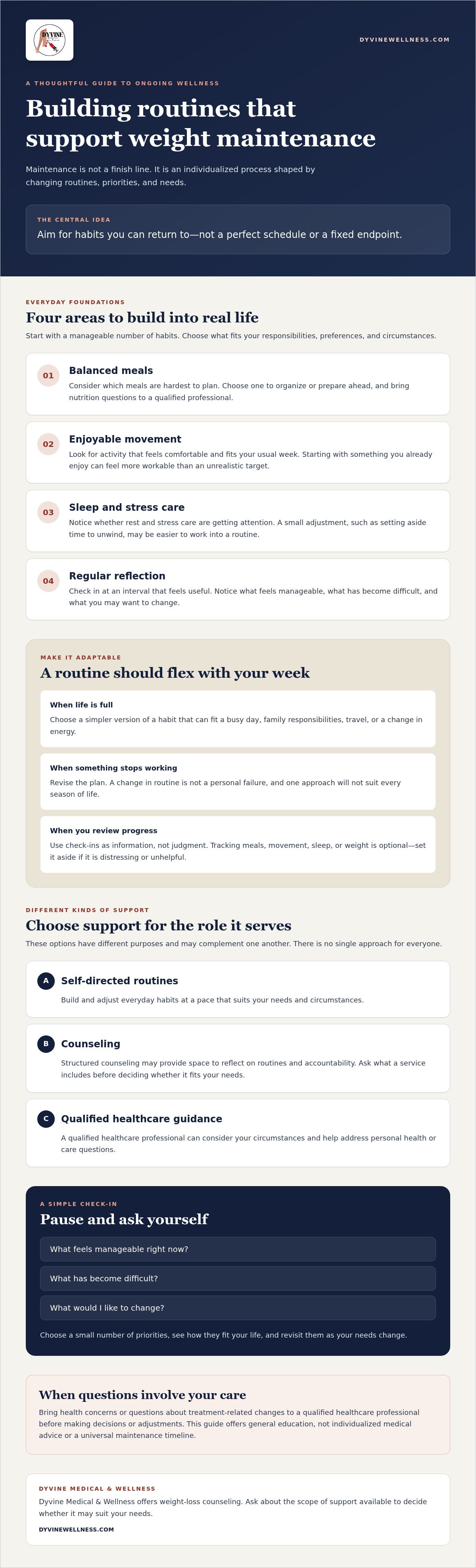
In life after losing weight with semaglutide, a steady routine can offer structure without turning wellness into a set of rigid rules. Consistency means returning to helpful habits when you can, not following a perfect schedule every day. Maintenance habits should fit your needs, responsibilities, preferences, and circumstances.
Consider starting with a few areas of everyday wellbeing:
Balanced meals: Think about food choices that feel satisfying and workable for your household and schedule. For a practical starting point, consider which meals are hardest to plan, then choose one to prepare or organize ahead. A qualified professional can help you explore nutrition questions suited to your needs.
Enjoyable movement: Choose ways to be active that you find comfortable and can make space for. Consider what fits your usual week, such as an activity you already enjoy, rather than setting an exercise target that doesn’t fit your life.
Sleep and stress care: Notice whether rest and ways of managing stress are receiving attention. Small adjustments, such as setting aside time to unwind, may feel more realistic than an ambitious overhaul.
Pick a small number of habits to begin with. For example, you might plan a few meals ahead, set aside time for an activity you enjoy, or focus on physical recovery. Incorporating supportive body care can also help you feel comfortable in your body as routines evolve. Review how those choices fit your life before adding more. The aim is a routine you can return to, not a checklist you must complete perfectly.
Create a routine that fits real life
Build plans around the week you actually have. A busy work period, family responsibilities, travel, or a change in energy may call for a simpler version of your routine. Decide what a manageable version of a habit looks like on a full day, then adjust when circumstances allow. If a plan stops working, revise it. A change in routine isn’t a personal failure.
Use check-ins as information, not judgment
Set aside time at an interval that feels useful to reflect on your routines, wellbeing, and any concerns. Ask yourself: What feels manageable? What has become difficult? What would I like to change? Tracking meals, movement, sleep, or weight is optional. Choose a method that feels comfortable and helpful, and leave it aside if it creates distress or isn’t useful to you.
If health concerns arise or your needs change, bring your questions to a qualified healthcare professional. Structured counseling may also offer space to reflect on routines and accountability. Dyvine Medical & Wellness offers weight-loss counseling. You can learn about weight-loss counseling and ask what support involves before deciding if it’s right for you.
Compare maintenance support options without expecting a quick fix
In life after losing weight with semaglutide, support can take different forms. The right mix depends on your questions, preferences, and circumstances. A routine or program may offer structure, but none can guarantee lasting results. Think of support as a way to make informed choices and adjust over time, not a promise of a particular outcome.
These options can complement one another, but they serve different purposes:
When self-directed habits may be a useful starting point
Some people prefer to plan routines independently, using a calendar, notes, or regular reflection to see what is working. This can be a reasonable starting point if it feels clear and sustainable. For example, a brief weekly note about which habits felt manageable can help you spot where your routine needs adjusting.
Self-management isn’t the right fit for everyone. If you feel uncertain, find that your needs are changing, or have health concerns, consider reaching out for qualified professional guidance rather than relying on self-directed routines alone.
What counseling and clinical guidance each provide
Counseling can support reflection, habit-building, and accountability. The specific support available depends on the program, so ask about its scope before deciding. Dyvine Medical & Wellness offers weight-loss counseling. You can review its weight-loss counseling and program information to learn more and ask what the service involves.
Clinical guidance is different. A qualified healthcare professional who understands your circumstances is the appropriate person to address individualized medical questions and clinical decisions. Counseling and clinical care may work alongside one another, but counseling should not be treated as a substitute for medical advice. Choose support based on the question you need answered, and be cautious of any program or routine presented as a guaranteed solution.
Create a practical maintenance plan and know when to seek guidance
A useful plan doesn’t need to solve everything at once. In life after losing weight with semaglutide, think in steps: choose priorities, build manageable routines, review what’s working, and adjust with care. The plan should support your wellbeing, not become another source of pressure.
General wellness planning can help organize everyday habits, but it isn’t individualized medical advice. Keep that distinction in mind as you decide what to manage independently and what to discuss with a qualified healthcare professional.
Set a few realistic priorities first
Start by asking what matters most in your current life. You might want to make meals easier to plan, create more room for rest, or find movement you enjoy. Choose actions that fit your schedule and responsibilities rather than changing every routine at once. If a habit becomes difficult to sustain, treat that as information. Adjust the plan or seek support instead of judging yourself for not following it perfectly.
Build in supportive check-ins
Set aside time for personal reflection or counseling check-ins in a way that fits your needs. There’s no one schedule that applies to everyone. You might note what feels manageable, what has changed, and what questions have come up. These observations can help you explain your concerns clearly when speaking with a healthcare professional.
Seek appropriate professional guidance if health concerns persist or you notice changes in your wellbeing that worry you. Write down what you’ve observed, when it began, and what you’d like to understand. Bring treatment-related questions to your healthcare professional, and don’t adjust treatment on your own. They can provide advice based on your individual circumstances.
For added structure and accountability, You can explore weight-loss counseling and ask about the program’s scope and available support before deciding whether it fits your goals.
Explore weight-loss support with Dyvine Medical & Wellness
Planning life after losing weight with semaglutide may include deciding what kind of support would be useful now. Dyvine Medical & Wellness offers weight-loss counseling and medical weight-loss programs. The scope of a program matters, so take time to understand what it includes before deciding whether it fits your goals and circumstances.
Counseling may provide a space to reflect on routines, clarify priorities, and discuss accountability. It isn’t a substitute for individualized medical advice, and no program can promise a particular outcome. If you’re considering support, ask how the service works and how it may fit alongside guidance from your qualified healthcare professional.
Questions to ask before choosing a wellness program
Before you choose a program, ask practical questions and make sure you understand the answers. For example:
What services are included, and what falls outside the program’s scope?
Who provides the support, and what are their responsibilities?
How is coordination handled if you also have questions for your healthcare professional?
Can the program accommodate your needs and circumstances?
Confirm with an appropriate healthcare professional whether a service is suitable for your individual needs. You can review Dyvine’s weight-loss program information for current details, then ask any follow-up questions before making a decision.
Take a considered next step in Stockbridge, Georgia
Dyvine Medical & Wellness serves Stockbridge and other communities in Georgia. If you’re local and exploring structured support, learn more about the counseling available and ask what participation involves. There’s no need to decide before you have the information you need. Take time to compare your options and discuss personal health questions with your healthcare professional.
Informed questions can make your next steps clearer. Professional support may help you reflect on priorities and routines, while your healthcare professional remains the right resource for individualized medical guidance.
All medical services are provided in accordance with applicable regulations. Dyvine Medical & Wellness provides specimen collection, education, and coordination services.
Carry your progress forward with thoughtful support
Life after losing weight with semaglutide is an ongoing process, not a test of willpower or a fixed destination. Sustainable routines can create a steadier foundation when they fit your needs and real-life responsibilities. Regular reflection can help you notice what’s working, adjust what isn’t, and bring personal health questions to a qualified healthcare professional.
You don’t have to make every decision at once. Start with a manageable next step, and seek support that matches the kind of guidance you need. Dyvine Medical & Wellness offers weight-loss counseling and medical weight-loss programs, with services for Stockbridge and other Georgia communities. Ask about the program’s scope and available support before deciding whether it’s right for you.
Explore weight-loss support and request more information. Your progress deserves care, patience, and a plan that can grow with you.
Frequently Asked Questions
What is life after losing weight with semaglutide like?
Life after losing weight with semaglutide varies from person to person. You may find that routines, appetite, energy, or priorities shift as you move from focusing on weight loss to longer-term wellbeing. There’s no universal timeline or single way maintenance should look. Consider what feels sustainable for you, and discuss personal health or treatment questions with your qualified healthcare professional.
Can weight return after significant weight loss?
Yes, weight can return after weight loss, but individual experiences differ, and no one can predict your personal outcome from a general guide. Changes in routines, health, and other circumstances may affect your maintenance journey. If you notice a change that concerns you, try not to treat it as a personal failure. Consider what support could help and discuss health concerns with a qualified healthcare professional.
What habits can support weight maintenance?
Repeatable habits may help provide structure, such as planning balanced meals, making room for enjoyable movement, and paying attention to sleep and stress. Start with actions that fit your schedule and responsibilities rather than trying to change everything at once. Check in with yourself to see what feels manageable. If a routine becomes difficult to sustain, adjust it instead of treating the change as failure.
Do I need professional support after losing weight?
Not everyone needs the same level or type of support. Some people feel comfortable organizing daily routines independently, while others may value counseling for reflection and accountability. A qualified healthcare professional is the appropriate resource for individualized medical advice and clinical decisions. These forms of support can complement one another, but they aren’t interchangeable. Choose based on your questions, needs, and circumstances.
When should I contact a healthcare professional during maintenance?
Contact a qualified healthcare professional if you have persistent health concerns, notice changes in your wellbeing that worry you, or have questions about your care. It may help to write down what you’ve noticed and the questions you want answered before reaching out. Don’t adjust treatment based on general online information. Your healthcare professional can respond with guidance that takes your individual circumstances into account.
Can Dyvine Medical & Wellness help with weight-loss maintenance?
Ask what the service includes, how support is coordinated, and whether it fits your needs. Confirm clinical questions with your healthcare professional. Dyvine serves Stockbridge and communities including Atlanta, McDonough, Jonesboro, Decatur, Covington, Conyers, Jackson, Macon, Columbus, Lawrenceville, Snellville, Buford, Sugar Hill, Griffin, Senoia, Peachtree City, and Fayetteville. All medical services are provided in accordance with applicable regulations. Dyvine provides specimen collection, education, and coordination services.


Comments