

The Emotional Impact of a DNA Test Result: Understanding What Comes Next

A DNA test may offer an answer, yet leave you unsure how to feel or what to do next. The emotional impact of a DNA test result can affect your sense of identity, family relationships, and understanding of personal history. Reactions are often mixed, and they may change over time.
This article offers practical ways to reflect on those feelings, distinguish what a test reports from what it means to you, and consider your next step at your own pace. Dyvine Medical & Wellness offers legal and non-legal DNA paternity testing in Georgia.
Table of Contents
Why Can a DNA Test Result Feel So Emotionally Significant?
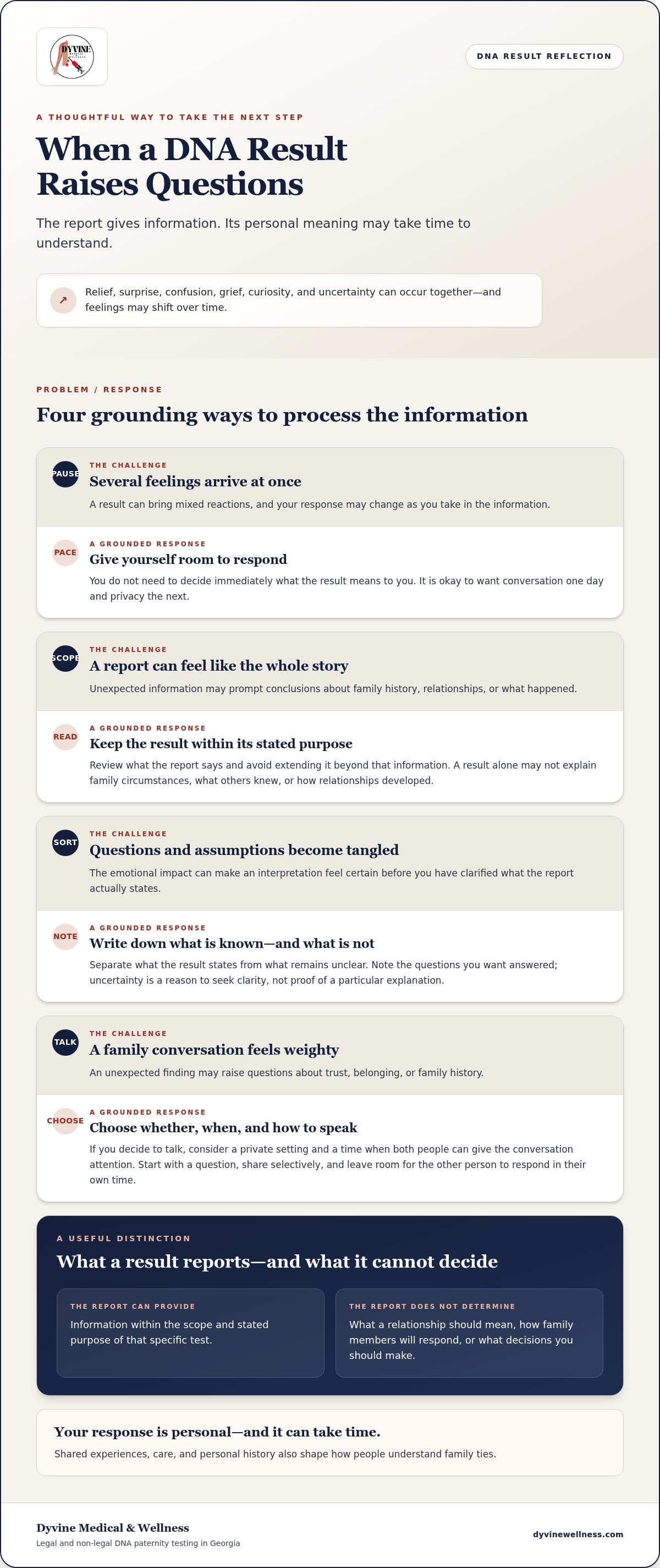
A DNA result can bring relief, surprise, confusion, grief, curiosity, or uncertainty. Several feelings may arrive together, and your response may shift as you take in the information. You do not need to decide immediately what the result means to you.
The emotional impact of a DNA test result is a personal response to information connected to identity, relationships, or family history. A result may provide information about a biological connection, but it is not a complete account of a family relationship. Shared experiences, care, and personal history also shape how people understand their family ties.
The video below offers one story about an emotional response to DNA information. Individual experiences and family circumstances can differ.
What feelings might come up after a DNA result?
Relief may come with a sense of clarity. Surprise or confusion may follow information that differs from what you expected. Some people feel grief as they reconsider a familiar family story; others feel curiosity about what they may learn next. Uncertainty can arise when a result leaves questions unanswered.
These reactions can coexist and change over time. You might feel ready to talk one day and want privacy the next. Let yourself respond at your own pace rather than pressuring yourself to reach an immediate conclusion. The emotional impact of genetic testing can include social and family considerations, not only a response to the information itself.
Why can family and identity make the result feel personal?
Family history often carries stories, expectations, and a sense of belonging. When a DNA result challenges what you understood about ancestry or a biological relationship, it may prompt you to revisit those stories. That can feel deeply personal because the information touches how you see yourself and your place within a family.
Genetic information and relationship meaning are connected, but they are not identical. A test result reports information within the scope of that test. People decide how it fits into their understanding of connection, care, and shared life.
People can respond differently to similar DNA findings because each person brings a different history, set of relationships, and expectations.
Understanding what a test is intended to show can offer a clearer starting point. Dyvine Medical & Wellness provides legal and non-legal DNA paternity testing in Georgia, including Stockbridge and communities across the state.
How Can an Unexpected DNA Test Result Affect Family Relationships?
An unexpected finding may prompt questions about trust, belonging, or the family history you have understood until now. You might wonder what it means for a parent, child, or other relative. Those questions can feel weighty, but a result does not automatically determine the quality or future of an existing relationship.
Separate what the test reports from what you might infer. A result provides information within the scope of a particular test. On its own, it may not explain the circumstances behind a finding, what family members knew, or how relationships developed. The emotional impact of a DNA test result can make assumptions feel like facts, especially before you have reviewed what the report actually says.
What if a result challenges what you expected?
Pause before drawing conclusions or sharing the information widely. Write down what the result states, what remains unclear, and what you want to understand. For example, an unexpected indication about a biological connection may raise questions about family history. That information alone does not establish why the family story differs from your expectations. Uncertainty is a reason to seek clarity, not proof of a particular explanation.
How can people prepare for a family conversation?
You can choose whether to talk, when to do so, and whom to include. If you decide to raise the subject, consider a private setting and a time when both people can give the conversation their attention. The other person may need time to take in the information, too.
Starting with a question rather than an accusation can keep the conversation focused on what you know and what you are trying to understand. You might say, “I received information that differs from what I expected, and I’d like to talk about what it could mean.” Describe what the test reports separately from your interpretation of it.
Share selectively: Personal results do not need to be discussed with everyone at once.
Leave room for a response: A family member may need time before they are ready to talk.
Keep the purpose clear: Focus on understanding, not reaching an immediate decision about the relationship.
If you are considering paternity testing, Dyvine Medical & Wellness offers legal and non-legal DNA paternity testing in Georgia. Understanding the purpose of the testing option can be one practical step as you decide what to do next.
What Is the Difference Between a DNA Result and Its Meaning?
A DNA test report provides information according to the test’s stated purpose and reporting. Its personal meaning is a separate question. A result may inform your understanding of a biological connection, but it does not tell you what a relationship should mean, how family members will respond, or what decisions you should make.
This distinction matters because the emotional impact of a DNA test result can make it tempting to move quickly from a report to a broader conclusion. Take time to understand the report and separate what it says from what you are still trying to make sense of.
What can a paternity test result tell you?
Understand a paternity test result in relation to the test’s stated purpose and the information provided in its report. The report is the source for what that specific test indicates. Avoid extending its meaning beyond what it describes or using it to fill in circumstances the test does not address.
Reviewing information about the relevant testing service can help you understand its purpose as you consider your next step.
What questions may remain after receiving a result?
After reading a report, list what it answers and what remains unclear. You may understand the reported finding but still have questions about terminology, the scope of the test, or how to read a particular part of the report. Seek clarification about the report itself rather than guessing at technical meaning or treating an unanswered question as evidence of a family story.
A test provides information; personal interpretation gives that information meaning in the context of a person’s life and relationships. Family conversations and decisions belong to the people involved, not to the test report. Give yourself room to understand what is written before deciding what it means to you or what you want to do next.
How Can You Process Difficult Feelings Before Taking the Next Step?
A result can bring a rush of thoughts, but you do not have to respond or make a family decision immediately. Give yourself room to notice what you are feeling, gather your questions, and choose a next step at a manageable pace. Processing is not the same as interpreting the test; it is a way to approach the information with care.
What can you do immediately after receiving a result?
Start with a pause. If you feel overwhelmed, step away from the report and return to it when you are ready. You do not need to send a message, make an announcement, or settle on an explanation in the moment.
When you revisit the report, try this simple sequence:
Pause: Give your first reaction space without judging it or demanding an immediate decision.
Note questions: Write down what you understand, what feels unclear, and what you want to ask about the report.
Review the information: Read the report and relevant testing information carefully. Seek clarification about factual or technical points rather than guessing at their meaning.
Decide on a conversation: Consider whether you want to speak with someone, who feels trustworthy, and what you are ready to share.
Personal information deserves thoughtful handling. Before sharing a result, consider who needs to know, what you are comfortable disclosing, and whether you would prefer a private conversation instead of a broad message. You can choose not to share it yet.
When might outside emotional support be helpful?
Talking with someone you trust may help you sort through questions without carrying them alone. Choose a person who can listen without pressuring you to reach a particular conclusion. You can also decide to reflect privately first.
If difficult feelings persist, feel overwhelming, or make daily life harder to manage, you may consider speaking with a qualified mental health professional. Seeking support is a personal option, not a judgment about your response. You do not need to have every detail figured out first.
Dyvine Medical & Wellness provides legal and non-legal DNA paternity testing in Georgia. Reviewing clear information about DNA paternity testing options can help you understand the service as you consider what comes next.
How Can DNA Testing Information Help You Make a Considered Choice?
Taking time to understand a test before deciding what to do is a reasonable step. You do not need to rush into testing, sharing information, or interpreting every possible outcome. Clarity about a test’s purpose can help you consider what information you are seeking and how you would like to handle it.
What should you understand before deciding to test?
Start by identifying the question you want the test to address and the information it is intended to provide. Review the test’s purpose and reporting so you understand what it can speak to and what may remain outside its scope. If a detail is unclear, seek factual clarification rather than filling gaps with assumptions.
It may also help to consider who could be affected by the result. Think about whether you feel prepared to receive information you did not expect, how you might protect your privacy, and whether you would want to discuss the result with anyone. These questions do not require immediate answers. They can help you make a choice that feels considered and aligned with your circumstances.
The emotional impact of a DNA test result can be part of deciding whether and when to test. Give yourself room to weigh practical questions and your readiness so you can approach the decision with care.
Where can Georgia readers learn about DNA paternity testing?
Dyvine Medical & Wellness offers legal and non-legal DNA paternity testing in Georgia, serving Stockbridge and communities across the state. Clear information about the service can help you understand the testing option as you consider your next step. Learn more about DNA testing services.
The related article about paternity testing in Stockbridge offers information about testing in that community. It is a resource about the testing topic, not emotional counseling. Testing information and emotional support serve different purposes, and recognizing that distinction can help you find the kind of guidance you need.
There is no requirement to decide today. When you are ready, reviewing the DNA paternity testing information can be a practical, informative next step.
Take Your Next Step With Care and Clarity
The emotional impact of a DNA test result can take time to understand. Mixed feelings are valid, and a test report is information to consider, not a complete account of family relationships or their meaning. Pause, clarify what the report says, and decide thoughtfully whether and how to share it.
If you are considering paternity testing, understanding its purpose and the information it is intended to provide can help you make a considered choice. Dyvine Medical & Wellness offers legal and non-legal DNA paternity testing for clients in Stockbridge and communities across Georgia. Testing services provide information; emotional support is a separate kind of care.
When you are ready to learn about the testing process, explore DNA testing services. Take the time you need, then visit www.dyvinewellness.com to learn more or take the next step.
Frequently Asked Questions
Is it normal to feel emotional after a DNA test result?
Yes. People can experience a range of feelings after receiving DNA information, including relief, surprise, confusion, grief, curiosity, or uncertainty. The emotional impact of a DNA test result is personal, and more than one feeling can arise at once. Your response may shift as you take in the information. You do not need to judge your reaction or decide immediately what the result means to you.
Can a DNA test result change how I feel about my family?
It can prompt you to reconsider parts of your family story or raise questions about belonging and trust. But a result does not automatically change a relationship or determine its meaning. Biological information is one part of a family’s story; care, shared experiences, and personal history also matter. Give yourself time to understand what the report says before deciding how it fits with your relationships.
What happens if a DNA test result is unexpected?
Pause before drawing conclusions or sharing the result widely. Review the report when you feel ready, then write down what it clearly states, what remains uncertain, and what you want clarified. An unexpected finding does not, by itself, explain the circumstances behind it or prove a particular family history. If report wording or technical details are unclear, seek factual clarification rather than relying on assumptions.
How should I talk to family about a surprising DNA result?
Choose whether, when, and with whom to discuss the result. If you decide to talk, consider a private setting and a time when both of you can focus. Use calm, non-accusatory language, such as, “I received information I didn’t expect, and I’d like to understand it better.” Share what the report states separately from your questions or interpretations, and allow the other person time to respond.
Can a DNA test result explain my whole family history?
No. A test reports information related to its stated purpose, but it cannot provide a complete account of family history, relationships, or the circumstances behind a finding. It may leave questions about what relatives knew, how a family story developed, or what a relationship means to the people involved. Treat the report as one source of information, and avoid assuming it answers questions beyond its scope.
Should I get emotional support after receiving a DNA test result?
That is a personal choice. You may find it helpful to talk with someone you trust or take time for private reflection. If feelings remain difficult to manage or interfere with daily life, consider speaking with a qualified mental health professional. Dyvine Medical & Wellness offers legal and non-legal DNA paternity testing in Stockbridge, Atlanta, McDonough, Jonesboro, Decatur, Covington, Conyers, Jackson, Macon, Columbus, Lawrenceville, Snellville, Buford, Sugar Hill, Griffin, Senoia, Peachtree City, and Fayetteville. Emotional support is separate from testing.


Comments