

Less Painful Blood Draws for Kids: A Parent’s Guide

What if making blood draws less painful for children begins with predictability and choice? It’s natural to worry about your child’s pain or fear. Honest preparation and a supportive plan can help, though they can’t guarantee a pain-free experience.
This guide covers how to prepare, offer comfort during the draw, and support your child afterward. You’ll also find questions to ask about positioning, comfort measures, and support for anxiety or sensory needs. Dyvine Medical & Wellness offers mobile and in-house phlebotomy. Contact the team to ask whether an appointment is available and appropriate for your child.
Table of Contents
Making blood draws less painful for children starts with preparation
If your child is worried about a blood draw, it’s natural to wonder how to make the visit easier. Children differ: one may be curious, while another feels unsettled by unfamiliar people, equipment, or sensations. Preparation can support comfort, but it can’t guarantee a pain-free experience. The aim is to help your child understand what to expect and feel accompanied, not to promise a particular outcome.
Preparation means sharing clear, age-appropriate information and making a simple comfort plan with your child and the collection professional. A blood draw, also called phlebotomy, involves collecting a blood sample. The Phlebotomy overview describes the procedure and equipment. Your child’s collection professional can explain what the specific visit will involve.
What should you tell a child before a blood draw?
Use simple, truthful words suited to your child’s age and understanding. You might explain that a healthcare professional will clean the skin, use a small needle to collect blood into a tube, and cover the spot afterward. Avoid graphic detail, confusing euphemisms, or surprising your child with the procedure.
Don’t promise that it won’t hurt. You can say, “You may feel a quick pinch or pressure, and it may feel different for you than it does for someone else.” Be honest that discomfort is usually brief, while recognizing that each child’s experience varies. If you don’t know an answer, tell your child you’ll ask the professional together.
How can caregivers plan for a calmer appointment?
Before the visit, confirm test instructions with the ordering clinician, including whether fasting is required and what your child may eat or drink. Instructions can vary by test, so don’t assume they are the same each time. Ask the collection provider about appointment timing, whether you can stay with your child, and what preparation is needed. If your child has sensory needs, previous difficult experiences, or strong anxiety, share that in advance and ask what accommodations may be possible.
Explain the basic steps before the appointment, using words your child understands.
Pack a familiar comfort item, such as a small toy, if the provider permits it.
Follow the ordering clinician’s test instructions and contact them if anything is unclear.
A mobile appointment may suit some families, but the right setting depends on the child, test requirements, and available support. Dyvine Medical & Wellness offers mobile and in-house phlebotomy. Contact the team to ask whether a pediatric appointment is available and appropriate. For general logistics, the guide to preparing for a mobile lab test may help you plan questions about a visit.
During a child’s blood draw, comfort and communication matter
A child’s experience may feel more manageable when they know what is happening and have a trusted adult nearby. The collection professional can explain the steps, guide safe positioning, and let you know how to support your child. Ask whether your child can sit beside you, sit on your lap if appropriate, or use another position the professional recommends. Avoid holding a child down. If they’re distressed or having trouble staying still, pause and ask the professional how to proceed safely.
Steady communication, a comfortable position, and a distraction chosen together can support a child without promising that the draw will be painless. For additional ideas, the Children’s Hospital of Philadelphia shares practical ways to help children cope with blood draws, including honest communication and comfort strategies.
Which distraction techniques may help during venipuncture?
Offer a few simple choices rather than asking an anxious child to decide everything: “Would you like to listen to music or hear a story?” A favorite video, a conversation about a familiar activity, or slow breathing may help shift their focus. Follow the collection professional’s guidance and stay flexible. One child may enjoy watching a video; another may prefer looking at you or turning away. No distraction works for every child or removes pain.
When should caregivers ask about additional comfort options?
Tell the professional before the draw if your child has had difficult blood draws, has fainted, fears needles, or has sensory needs that could affect positioning, sound, or touch. This information can help the team discuss an appropriate approach. You can also ask your child’s healthcare professional whether an age-appropriate numbing option is suitable for the planned test and how it should be used. Don’t apply a topical product unless a qualified professional confirms it’s appropriate and explains the instructions.
During the draw, use a calm voice and simple encouragement. You might say, “I’m here. Keep listening to your song.” If your child becomes overwhelmed, tell the collection professional rather than trying to push through without guidance. Small choices can support a sense of trust and control, even when the moment feels difficult.
If you’re considering its services for a child, review phlebotomy services and contact the team to ask whether an appointment is available and suitable for your child’s needs.
Common worries about children’s blood draws, and what caregivers can do
It’s easy to assume a blood draw will feel the same for every child, but children respond differently. A past experience, worry about unfamiliar sensations, or sensory needs can shape how a child copes. Your calm presence may offer reassurance and connection, but it can’t control exactly how your child feels or how the procedure goes. The goal isn’t to make every moment easy. It’s to listen, prepare, and help your child feel supported.
Avoid threats, bargaining, or statements such as “If you’re good, you’ll get a treat.” These can add pressure to an already uncertain moment. False promises may also affect trust if the experience doesn’t match what you said. A coping plan and honest, age-appropriate communication are among the approaches discussed by the Children’s Hospital of Philadelphia in its guidance on how to help your child cope with bloodwork.
Should you tell a child that a blood draw will not hurt?
It’s kinder to avoid an absolute promise. Instead, acknowledge what you can’t know: “You might feel a pinch or pressure. I’ll stay with you, and you can tell me what you need.” Keep the explanation brief and invite questions. Answer what your child asks without adding details they haven’t requested. This respects their concern while giving them a reliable sense of what may happen.
What if a child has strong needle fear or sensory needs?
Share relevant concerns with the ordering clinician and collection professional before the appointment. Explain what has been difficult before, such as waiting, bright lights, touch, or uncertainty about what comes next. Ask whether timing, setting, caregiver presence, or other accommodations can be discussed. A familiar routine or quieter setting may be worth asking about, but what’s possible depends on the test and provider.
If distress is persistent or intense, ask your child’s clinician for guidance on planning the blood draw. Don’t delay testing that has been recommended without first discussing the timing with the healthcare professional who ordered it. Making blood draws less painful for children isn’t about finding one guaranteed solution. It’s about understanding this child’s needs and arranging support with the care team.
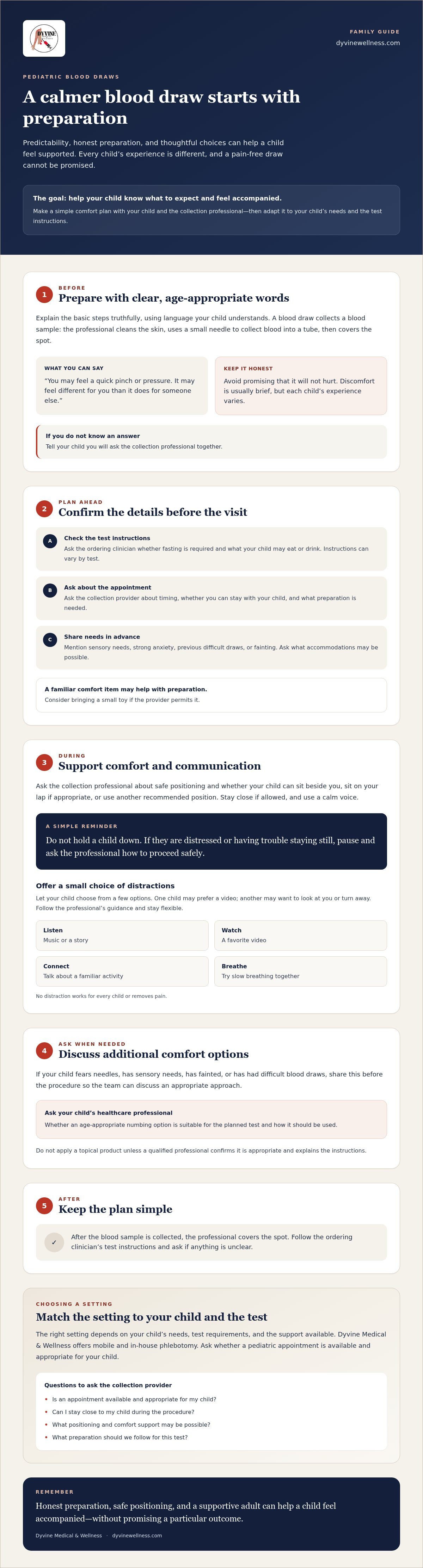
A simple before, during, and after blood-draw comfort plan
A brief plan can help everyone know what to expect while leaving room to adjust to your child’s needs and the collection professional’s instructions. Use this checklist as a starting point, not a substitute for test-specific or clinical guidance. The goal of making blood draws less painful for children is thoughtful support, not a guaranteed result.
Before: Confirm test instructions with the ordering clinician, including whether fasting or other preparation is required. Explain the visit in language your child understands, plan the trip and timing, and pack a familiar comfort item if the provider allows it. Share relevant history or support needs with the collection professional.
During: Stay close if permitted, offer calm encouragement, and use the distraction you agreed on with your child. Help them follow the professional’s directions about positioning and keeping still. If your child becomes distressed or you have a concern, let the professional know.
After: Acknowledge your child’s effort without judging how they responded. Follow the collection professional’s directions for applying pressure and caring for the collection site. Contact your child’s healthcare professional about symptoms that seem unusual or concerning.
What can families do before the appointment?
Preparation starts with clear instructions. Don’t assume fasting is needed or that the same rules apply to every test. Check with the ordering clinician about food, drink, and any other steps. Then ask the collection provider what to bring and whether a comfort item is permitted. Allow enough time to avoid rushing, and tell the provider about previous difficult draws, fainting, needle fear, or sensory needs.
What should caregivers do after the blood draw?
Keep the transition gentle. Offer a simple, specific acknowledgment, such as, “You told me what you needed and stayed with the instructions.” Follow the collection professional’s guidance for pressure and site care rather than relying on general advice that may not fit your child or test. If you’re unsure about what you observe afterward, contact a clinician for guidance instead of trying to diagnose the cause yourself.
Dyvine Medical & Wellness provides mobile and in-house phlebotomy. Contact the team to ask whether an appointment is available and appropriate for your child. You can contact Dyvine about phlebotomy services with questions about your child’s needs. All medical services are provided in accordance with applicable regulations. Dyvine Medical & Wellness provides specimen collection, education, and coordination services.
Choosing a blood-draw setting and asking a provider about child-friendly support
The right setting depends on more than convenience. Consider your child’s needs, the test requirements, the support available, and the guidance of the clinician who ordered the test. A familiar place may feel more comfortable for some children, while others may do better in a setting suited to their testing needs. No setting can guarantee a pain-free experience, but asking clear questions can help you make an informed choice.
Could mobile blood collection suit a child?
Mobile collection may appeal if being at home feels more familiar to your child, but it isn’t the best fit for every family or test. Ask the ordering clinician whether the test and collection circumstances are appropriate for a mobile appointment. Then ask the provider whether they accept pediatric appointments, whether age or test restrictions apply, and what accommodations may be available.
You can review its phlebotomy services as part of that inquiry.
What should you ask before booking?
A short conversation can clarify whether the service matches your child’s needs. Ask who performs the collection, what preparation the test requires, and whether a caregiver may stay with the child. If your child has needle fear, sensory needs, or a history of difficult draws, explain this and ask what comfort accommodations can be discussed. Follow any test-specific instructions from the ordering clinician.
Do you accept appointments for children of my child’s age and for this test?
Can a caregiver remain present, and what positions are supported?
What preparation is required, and what comfort items or accommodations are permitted?
These questions can help you assess how making blood draws less painful for children may involve choosing a setting that fits your child, not simply the most convenient option. Families in Stockbridge, Atlanta, McDonough, Jonesboro, Decatur, Covington, Conyers, Jackson, Macon, Columbus, Lawrenceville, Snellville, Buford, Sugar Hill, Griffin, Senoia, Peachtree City, and Fayetteville can contact Dyvine Medical & Wellness to ask about their needs. If the team confirms that the service is suitable, you can book an appointment online.
Build a calmer plan for your child’s next blood draw
Making blood draws less painful for children begins with preparation, honest communication, and support tailored to the child. Explain what to expect without making promises, and ask the collection professional about positioning, comfort options, and instructions for before or after the draw. A caregiver’s calm presence can help a child feel supported, even though every child’s experience is different.
The setting matters, too. Mobile collection may feel more familiar for some families, while an in-house appointment or another setting may better suit the test or child’s needs. Contact the team to ask whether your child’s collection needs can be accommodated.
Contact Dyvine Medical & Wellness about phlebotomy options and ask whether an appointment is suitable for your child before booking. With clear information and thoughtful support, you can help your child approach the appointment feeling prepared and cared for.
Frequently Asked Questions
How can I make a blood draw less painful for my child?
Preparation, supportive positioning, and a distraction may help your child feel more comfortable, but no approach can guarantee a pain-free experience. Explain the steps honestly in age-appropriate language, ask the collection professional about positions and comfort options, and let your child choose between simple distractions such as music or a familiar video. Making blood draws less painful for children means adapting support to your child, not expecting one method to work for everyone.
Should I tell my child that a blood test will hurt?
Be honest without predicting exactly how it will feel. Rather than saying it won’t hurt, explain that your child may notice a quick pinch or pressure, and that experiences differ. Keep the explanation simple and invite questions. You might say, “I’ll stay with you, and you can tell me what you need.” Avoid frightening details or promises that may not match your child’s experience.
Can a child bring a comfort item to a blood draw?
Often, a familiar item such as a small toy or blanket can be part of a child’s comfort plan, but check with the collection provider first. Ask whether the item can be brought into the collection area and used during the procedure. You can also plan a backup distraction, such as a story or song, in case the item isn’t permitted or doesn’t hold your child’s attention.
Can numbing cream be used before a child’s blood test?
Ask your child’s healthcare professional whether a numbing option is suitable for the planned test and your child. Don’t apply a topical product unless a qualified professional confirms it’s appropriate and explains how to use it. The right advice may depend on the child and the collection circumstances. If you’re considering this option, ask early so you have time to get clear instructions before the appointment.
What should I do if my child is afraid of needles?
Tell the ordering clinician and collection professional about your child’s fear before the appointment, including any previous difficult draws or sensory needs. Ask what support, timing, or setting may be available. Use calm, truthful language and offer a few manageable choices, such as a preferred distraction. If the fear is intense or persistent, seek guidance from your child’s healthcare professional rather than delaying recommended testing without discussing it.
Can children have blood drawn at home?
Mobile phlebotomy may be an option, but suitability depends on the test, the child’s needs, and provider availability. Contact the team to ask about age or test restrictions and available accommodations. Dyvine’s Georgia service communities include Stockbridge, Atlanta, McDonough, Jonesboro, Decatur, Covington, Conyers, Jackson, Macon, Columbus, Lawrenceville, Snellville, Buford, Sugar Hill, Griffin, Senoia, Peachtree City, and Fayetteville.
What should I do after my child has a blood draw?
Follow the collection professional’s directions for applying pressure and caring for the collection site. Offer calm encouragement and acknowledge your child’s effort, whatever their reaction. If you’re uncertain about aftercare or notice something concerning, contact your child’s healthcare professional for advice rather than trying to diagnose the issue yourself. Follow any test-specific instructions you were given, since guidance can vary with the collection circumstances.


Comments