

Phlebotomy Certification in Georgia: Training, Exams, and Career Steps

If you searched for a mobile blood draw service atlanta, you may also be curious about the training behind a blood collection visit and what it takes to work in phlebotomy. Before choosing a course, find out which credentials employers recognize and what each training program actually includes.
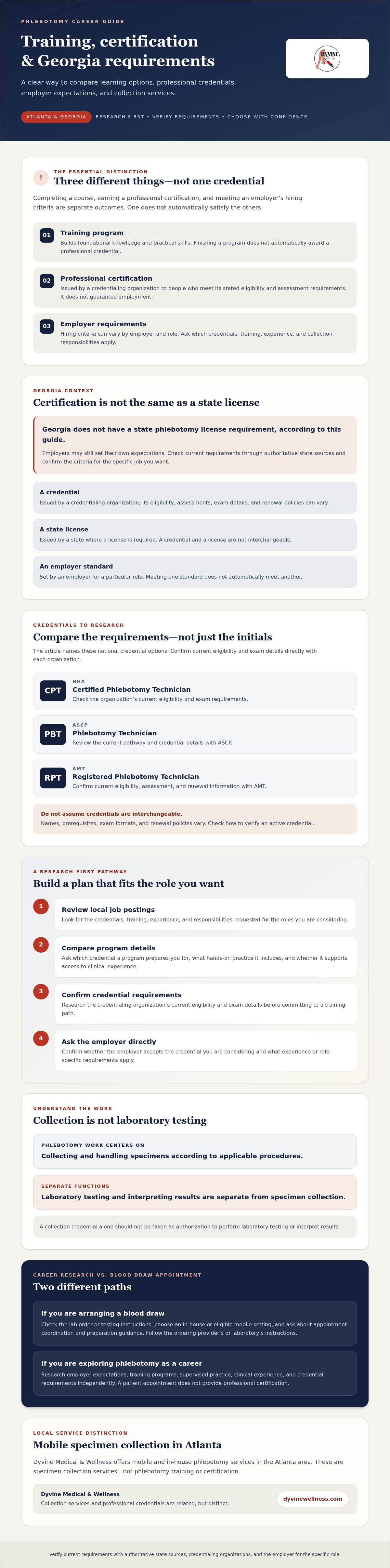
Training programs and certification exams are separate. Georgia does not have a state phlebotomy license requirement, but employers may set their own expectations. Comparing those expectations with program details can help you invest your time in preparation that fits your goals.
This guide explains how to compare programs, research national credentials such as NHA’s CPT, ASCP’s PBT, and AMT’s RPT, and ask about supervised practice and clinical experience. It also covers how mobile specimen collection fits into the work. Dyvine Medical & Wellness offers mobile and in-house phlebotomy services in the Atlanta area. These are collection services, not phlebotomy training or certification.
Table of Contents
What phlebotomy certification means for aspiring Georgia professionals
If you’re exploring phlebotomy work in Georgia, separate three things: education, certification, and an employer’s hiring requirements. A course can build foundational knowledge and practical skills, but completing it doesn’t automatically award a professional credential or meet a particular workplace’s requirements.
Phlebotomy certification is a credential awarded by an organization to people who meet its stated eligibility and assessment requirements. It documents professional preparation, but it doesn’t guarantee employment or set identical requirements for every role. For a general overview of the work, see Phlebotomy.
This short video offers a perspective on the business side of mobile collection work:
What does a phlebotomy certification show?
A credential generally shows that someone has met the issuing organization’s requirements, which may include eligibility criteria and an exam. Credential names, prerequisites, exam formats, and renewal policies vary. Compare the actual requirements instead of assuming credentials are interchangeable. Confirm current details with the issuing organization, including how to verify an active credential.
Certification is also different from scope of work. A phlebotomist’s role centers on collecting and handling specimens according to applicable procedures. Laboratory testing and interpreting results are separate functions. A collection credential alone shouldn’t be taken as authorization to perform them.
Is certification the same as a state license?
No. A credentialing organization issues a certification, while a state issues a license where one is required. Employers may also set their own hiring criteria. These are separate standards, and meeting one doesn’t automatically mean you meet the others.
Before enrolling or applying, check current Georgia requirements through authoritative state sources and ask the employer what it expects for the specific role. Confirm whether it accepts the credential you’re considering, requires particular training or experience, and defines collection duties in a specific way. Don’t assume one hiring standard applies to every setting.
Dyvine Medical & Wellness provides mobile and in-house specimen collection services in the Atlanta area, not phlebotomy training or certification. A mobile phlebotomy service is one example of a collection setting. Professional credentials and collection services are related, but distinct. If you’re researching a mobile blood draw service atlanta, keep that difference in mind as you explore career options and local services.
How to pursue phlebotomy certification: a research-first pathway
If your immediate goal is to arrange a blood draw, you don’t need to choose a phlebotomy training program first. Booking specimen collection and pursuing a professional credential are different processes. For an appointment, focus on the collection requested, the service setting, and any instructions from the healthcare professional who ordered the testing.
Confirm the collection details. Check the lab order or testing instructions before asking about service options. If anything is unclear, contact the ordering provider or laboratory rather than guessing about the test or preparation.
Choose a setting. Decide whether you’re looking for an in-house appointment or a mobile blood draw at an eligible location. Ask the service provider whether it serves your location and what appointment arrangements are available.
Ask what to expect. Confirm what information to have ready, how the appointment will be coordinated, and whether your test has specific preparation instructions. Follow guidance from the ordering provider or laboratory.
Keep career research separate. If you’re exploring phlebotomy as a career, research employer expectations, training programs, and credential requirements independently. A patient appointment doesn’t provide professional certification.
How should you compare mobile and in-house collection options?
Start with practical details you can confirm: whether the provider serves your location, what appointment options are available, and how collection is coordinated. Don’t assume every test or location is available through every service. Confirm arrangements directly and keep any preparation instructions from your provider or laboratory accessible.
How can you confirm appointment and preparation details?
Check directly with the collection service and the professional or laboratory that ordered the test. Verify the appointment location and any instructions for your specific collection. If instructions conflict or are unclear, ask for clarification before the appointment. This helps you prepare without relying on general advice that may not apply to your test.
Dyvine Medical & Wellness offers mobile and in-house phlebotomy services in the Atlanta area. Its mobile phlebotomy services page describes collection services, not certification or career training. If you’re looking for a mobile blood draw service atlanta, review the service information and contact Dyvine to ask about your needs and current arrangements.
How to compare phlebotomy credentials and training options
Credential names can look similar while the eligibility rules, assessments, and renewal requirements differ. Treat options such as NHA’s CPT, ASCP’s PBT, and AMT’s RPT as credentials to investigate, not as endorsements or a universal ranking. Compare each one with the role you want and the employers you may apply to.
The right credential is the one that meets verified requirements for your intended role and the employers you’re targeting. Use the questions below to organize your research, then confirm details with the credential issuer, training provider, and prospective employer.
Which factors matter when choosing a credential?
Look for information you can verify, not just a program’s claim that it prepares students for certification. Check whether the issuer offers a way to confirm credential status, and ask employers which credentials they accept for the specific position. Recognition can depend on the workplace, so confirm acceptance before paying for a course or exam.
What should you ask a training provider?
Ask whether instruction includes supervised practical experience, how that experience is recorded, and what completion documents you’ll receive. Request written details about the curriculum, program requirements, and the credential the course is designed to prepare you for. Clarify which steps are separate, such as submitting an exam application or meeting issuer eligibility requirements. Completing a training program and earning an independent certification may be separate steps.
Keep your comparison tied to your career goal. Reviewing a mobile blood draw service in Atlanta can help you understand a collection setting, but a service provider’s offerings don’t determine which credential an employer requires. Dyvine Medical & Wellness provides mobile and in-house phlebotomy services, not phlebotomy training or certification.
How to prepare for phlebotomy work in Atlanta and Georgia
Preparing for phlebotomy work involves more than completing education or earning a credential. You also need to understand the expectations of the workplace you hope to join. Atlanta-area job postings can help you spot common requirements, but each listing is a starting point for questions, not a statewide standard.
How can Atlanta job seekers check local expectations?
Review several current postings for the setting you’re considering, such as a clinic or mobile collection service. Note what each employer says about credentials, experience, and responsibilities. Compare the listings rather than assuming one represents every employer.
If a requirement is unclear, contact the hiring team and ask:
Which credentials do you accept for this position?
Is previous collection experience expected, and what experience is relevant?
What duties are part of the role, and what workplace procedures should applicants understand?
Check that postings are active and that any requirements you rely on are current. This helps focus your preparation on the roles you want, instead of assumptions about every employer in Georgia.
What does mobile specimen collection involve?
Mobile collection describes a service setting, not a certification category. Depending on the service and its arrangements, a phlebotomy professional may collect specimens in a client’s home or workplace. The setting calls for clear communication, respectful handling of personal information, and careful adherence to the procedures established for the work.
Before applying for a mobile role, ask how scheduling and coordination work, which locations the position serves, and what protocols guide specimen collection and handling. Employers can explain the role’s specific expectations. Don’t infer duties or qualifications from the word “mobile” alone.
Its mobile phlebotomy services page describes a local collection setting, not a training or certification program. A search for “mobile blood draw service atlanta” can help you explore service options, while job postings and hiring teams are better sources for career requirements.
To learn more about Dyvine’s Atlanta-area collection services, explore mobile phlebotomy services.
Next steps: verify your credential plan and understand Atlanta collection services
A clear plan makes your next decision more grounded. Before enrolling, check that the program, credential, and workplace expectations align with the role you want. A training provider’s description is only one part of the picture. Verify details with both the credential issuer and prospective employers.
What should you confirm before enrolling?
Ask the provider for written information about program requirements, supervised practice, completion records, and the credential it prepares students to pursue. Verify current eligibility and assessment rules directly with the credential issuer. Then compare those details with what employers in your intended setting say they accept.
Choose a target role and note its collection duties and setting.
Check employer criteria by reviewing current postings and asking hiring teams for clarification.
Compare programs using documented curriculum, practical experience, and credential preparation.
Confirm issuer details for eligibility, assessment, and credential maintenance before committing.
The goal isn’t to find one credential that fits every phlebotomy role. It’s to match your preparation to current, verifiable expectations and keep track of where you confirmed them.
Where can Atlanta readers learn about specimen collection services?
Career preparation and patient-facing blood draw services serve different purposes. A phlebotomy course or professional credential supports a career pathway; a mobile collection service is an option for people seeking specimen collection outside an in-house setting. Searching for a mobile blood draw service atlanta can lead to service information, but it won’t establish training or hiring requirements.
The company provides specimen collection, not phlebotomy training or certification. Visit the mobile phlebotomy services page to learn about the local collection service. It is a service resource, not a certification enrollment page.
If you’re seeking a blood draw rather than career guidance, explore Dyvine’s phlebotomy services and review the information provided there. For credential planning, rely on current guidance from employers, training providers, and credentialing organizations.
Take your next step with clarity
Building a path into phlebotomy work starts with careful research. Choose a target role, check current employer expectations, compare training programs, and confirm eligibility and assessment details with the credentialing organization. A training certificate and a separate professional credential may represent different steps, so check what each program provides before enrolling.
Keep career research distinct from patient-facing collection services. Dyvine Medical & Wellness offers mobile and in-house phlebotomy services, with coverage that includes Atlanta and Stockbridge. The company provides specimen collection services, not phlebotomy training or certification. If you’re looking for a mobile blood draw service atlanta, review the service details and confirm whether they fit your needs.
Explore Dyvine's professional mobile phlebotomy services and contact Dyvine to ask about collection options in your area.
Frequently Asked Questions
Do you need phlebotomy certification to work in Georgia?
Georgia does not have a state-level phlebotomy license requirement, but employers may set their own credential and experience criteria. Certification and state licensing are different, and expectations can vary by workplace and position. Before applying, review current Georgia guidance and ask each employer which qualifications it requires or prefers. The absence of a state license doesn’t mean every employer will hire without professional training or certification.
How do you become a certified phlebotomist in Georgia?
Start by identifying the kind of role you want and checking current Atlanta-area job postings for credentials and experience. Compare training programs by curriculum, supervised practice, and preparation for a specific credential. Then verify eligibility and exam requirements directly with the credentialing organization. Completing a course may be separate from applying for and earning certification, so confirm each step before enrolling.
How long does it take to get phlebotomy certified?
There isn’t one timeline for every learner or credential. The time can depend on the training program’s schedule and requirements, your eligibility, and the certification organization’s application and assessment process. Ask programs about their current completion expectations, then confirm exam steps and scheduling directly with the credential issuer. Avoid relying on a general estimate until you know which route you plan to follow.
What is the difference between phlebotomy training and certification?
Phlebotomy training is education that may include instruction and supervised practical experience. Certification is a credential issued by an organization to applicants who meet its current requirements, which may include an assessment. A training program can prepare you for a credential without awarding it. Before signing up, ask what completion records you’ll receive, which certification the course prepares you to pursue, and whether a separate application or exam is required.
Which phlebotomy certification do Atlanta employers accept?
Acceptance varies by employer and position, so don’t assume every Atlanta workplace accepts the same credential. NHA’s CPT, ASCP’s PBT, and AMT’s RPT are examples to research, not a definitive ranking or endorsement. Check recent job postings, then ask hiring teams which credentials they accept for the role you want. Confirm eligibility, assessment, and renewal details directly with the issuing organization before choosing.
Can a phlebotomist work in mobile blood draw services?
Yes. Mobile collection is one setting for phlebotomy work, but it isn’t a separate certification category. Employers determine the qualifications and procedures for each role. If you’re seeking a mobile blood draw service atlanta, Dyvine offers mobile and in-house phlebotomy. Its stated local coverage includes Stockbridge, Atlanta, McDonough, Jonesboro, Decatur, Covington, Conyers, Jackson, Macon, Columbus, Lawrenceville, Snellville, Buford, Sugar Hill, Griffin, Senoia, Peachtree City, and Fayetteville. Confirm service details directly.
What should I check before enrolling in a phlebotomy program?
Ask for written details about the curriculum, supervised practical experience, instructor qualifications, program requirements, completion records, and the credential the program prepares you to pursue. Confirm whether exam applications or other steps are separate. Then check the credential issuer’s current eligibility and assessment rules, and ask prospective employers whether they accept that credential and training route. These checks help you compare programs against your goals rather than relying on broad promises.


Comments