

Follow-Up DOT Drug Testing Procedures: A Guide to Restoring Professional Alignment
- Yatika Peterson
- 6 hours ago
- 12 min read

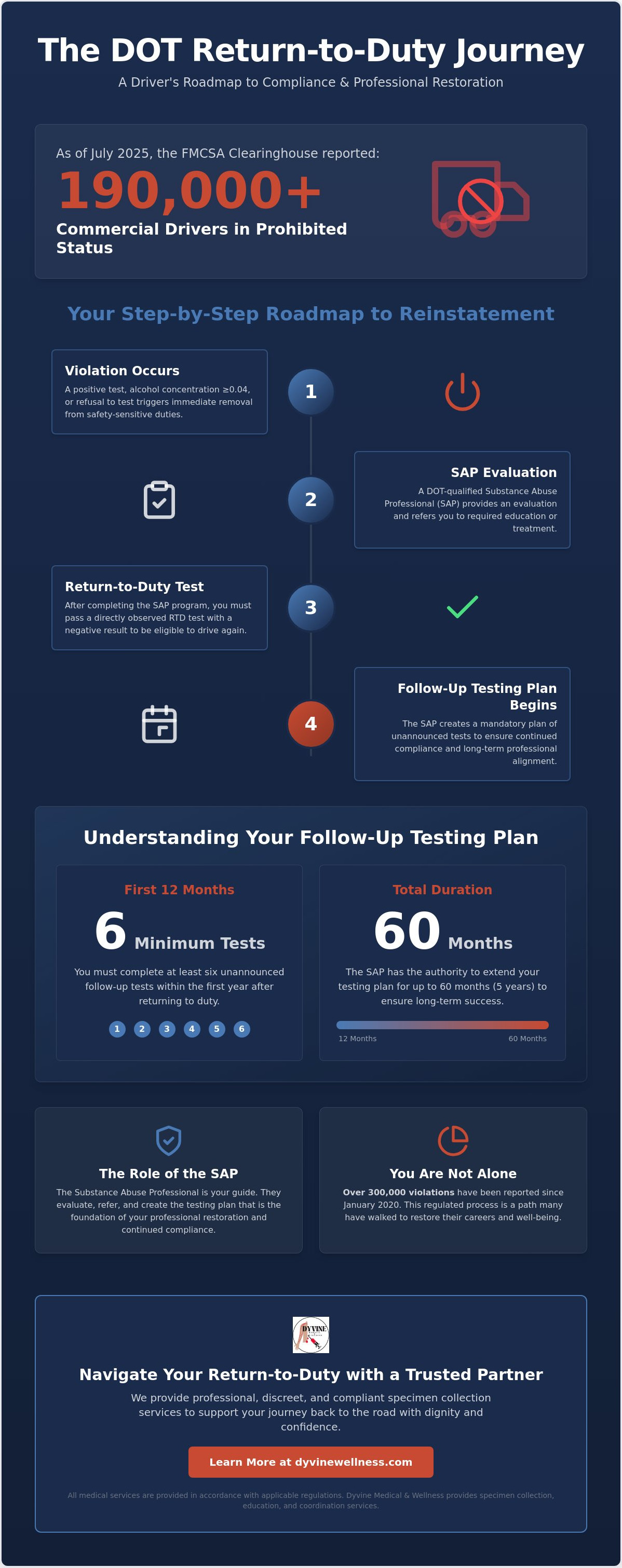
As of July 1, 2025, over 190,000 commercial drivers were held in prohibited status within the FMCSA Clearinghouse, a number that represents thousands of individuals momentarily separated from their livelihood. We know that facing a violation can feel like a disruption to your natural rhythm, sparking deep anxiety about your future and the complexity of returning to duty. It's a heavy burden to carry, but this moment doesn't define your entire journey; it's simply an invitation to restore your professional alignment.
Understanding the follow-up DOT drug testing procedures is your first step toward healing this professional rift and reclaiming your place on the road. We're here to provide a clear, supportive roadmap that honors your privacy and your commitment to safety. This guide will walk you through the essential regulatory requirements, the nuances of the five year testing window, and the professional specimen collection services needed to ensure you remain fully compliant with FMCSA and DOT standards. You'll discover how to navigate the SAP process with grace, allowing you to return to your calling with a renewed sense of integrity and peace.
Table of Contents
Restoring Professional Alignment: What is Follow-Up DOT Testing?
When your professional path encounters a disruption, like a positive result or a refusal to test, the road back can feel uncertain. Follow-up testing is the final, essential phase of the DOT Return-to-Duty (RTD) process. It isn't a punishment; it's a structured way to prove you've restored your internal and professional alignment. This specific path is triggered when a driver faces a positive drug test, an alcohol concentration of 0.04 or higher, or a refusal to test. These moments require a technical analysis of a biological specimen to confirm that your body is once again a clear vessel for the safety-sensitive work you perform.
Understanding the follow-up DOT drug testing procedures helps you see the boundary between your past challenges and your future potential. Unlike random, pre-employment, or post-accident testing, these tests are specifically designed for your unique recovery journey. They ensure the sacred container of public safety remains intact while you reclaim your vitality and focus. To better understand how the testing process works behind the scenes, watch this helpful video:
The Role of the Substance Abuse Professional (SAP)
The SAP acts as a compassionate gatekeeper on your journey toward restoration. They provide the initial evaluation to understand your needs, refer you to the right education or treatment, and conduct a follow-up evaluation to witness your progress. Only a DOT-qualified SAP has the authority to create the testing plan that guides your return. They determine the frequency and duration of your tests, acting as the architects of your professional reclamation. These follow-up DOT drug testing procedures ensure every step you take is grounded in both regulatory truth and personal growth, allowing you to move with a steady and intentional rhythm back into your calling.
Why Compliance is an Act of Care
Choosing to follow these procedures is a profound act of self-love and community protection. Since January 2020, over 300,000 drug and alcohol violations have been reported in the FMCSA Clearinghouse. This statistic reminds us that you aren't alone in this process of reclamation; many others have walked this path toward wholeness. By engaging in DOT drug testing, you're protecting your livelihood and the families who share the road with you. Compliance isn't a cold, clinical requirement. It's a tool for maintaining professional vitality and harmony. It allows you to move forward with the confidence that your presence on the road is a contribution to the collective well-being.
The Return-to-Duty Journey: A Step-by-Step Roadmap
When a violation occurs, the sudden removal from safety-sensitive duties can feel like a jarring disconnection from your purpose. It is a time of stillness that requires patience and intentional action to resolve. This journey toward restoration follows a specific, regulated rhythm designed to ensure you are truly ready to hold the responsibility of the road once more. The process begins with your immediate removal from duty, followed by a deep dive into self-correction through a Substance Abuse Professional (SAP) evaluation. These experts guide you through the necessary education or treatment, preparing you for the moment you can finally seek professional specimen collection for your return-to-duty test.
Once you've completed your initial healing path, you'll face the Return-to-Duty (RTD) test. This is your official gateway back to the driver's seat. If this test is negative, your employer receives the green light to resume your safety-sensitive assignments. However, the journey doesn't end there. You will then enter a period of sustained alignment, where the follow-up DOT drug testing procedures take over. This phase involves a series of unannounced tests conducted over a period of 12 to 60 months, ensuring your commitment to safety remains a consistent part of your professional life.
The Return-to-Duty (RTD) Test vs. Follow-Up Testing
It's vital to distinguish between the initial RTD test and the subsequent follow-up plan. The RTD test is a singular event that must be completed successfully before any safety-sensitive work resumes. Per the latest June 2026 updates to 49 CFR Part 40, all such tests must be conducted under direct observation using urine samples, as laboratory certification for oral fluid testing is still finalized. While the RTD test opens the door, follow-up testing keeps it open by verifying your ongoing wellness. These tests are always unannounced and separate from your company's random testing pool, serving as a personal testament to your integrity.
FMCSA Clearinghouse Reporting Requirements
Your progress is carefully tracked within the FMCSA Clearinghouse, a digital record that ensures transparency and safety across the industry. Employers must report the initial violation and the successful completion of your RTD test to this secure database. This system allows for real-time monitoring of your status, closing loopholes and protecting the collective vitality of our Georgia transportation hubs. For organizations managing these transitions, staying current with Background Checks and I-9 Verification is equally important for maintaining a fully compliant fleet. You can find more detailed guidance on the official requirements for Return-to-duty and Follow-up testing through the Department of Transportation's employee resources.
Managing the Follow-Up Testing Plan: Frequency and Procedures
The rhythm of your return is guided by a specific, intentional plan. Once you resume safety-sensitive duties, you'll enter a period of heightened awareness and accountability. The baseline requirement for this phase is a minimum of six unannounced tests within the first 12 months. This isn't a static schedule; it's a dynamic process that reflects your ongoing dedication to safety. Your SAP has the authority to extend this window for up to 60 months, or five years, depending on your unique needs and progress. Mastering the follow-up DOT drug testing procedures requires an understanding of the frequency mandated by federal law to ensure your fleet remains in perfect harmony.
The timing of these tests must remain entirely unpredictable. There should be no discernable pattern, ensuring that your commitment to a clear and vibrant state of being is constant throughout your journey. This unpredictability isn't meant to create anxiety. Instead, it's designed to foster a lifestyle of permanent alignment with your calling. You can find the full details of these requirements in the DOT's official return-to-duty process, which outlines the stewardship required from both the employee and the employer. Adhering to these follow-up DOT drug testing procedures is a testament to your integrity and your respect for the community you serve.
The Necessity of Direct Observation
Direct observation is a regulated procedure where a same-gender collector monitors the specimen provision. This mandate exists to protect the integrity of the testing process and prevent any subversion of the results. While this requirement can feel deeply personal, we view it as a necessary step in maintaining the sacred container of public safety. At Dyvine Medical & Wellness, we provide DOT drug testing with the highest level of dignity and medical professionalism. We ensure that every collection is handled with maternal warmth and respect, transforming a clinical requirement into a supportive experience that honors your body as a temple.
Employer Responsibilities and Record Retention
Employers act as the primary stewards of this restorative plan. It's their duty to ensure that every test is conducted exactly as the SAP dictates, without deviation. If you choose to move to a new company within the DOT industry, your testing plan follows you; it's a part of your professional lineage. Employers must also honor the practice of record retention, keeping all follow-up testing documentation for a full five years. This steady, intentional record-keeping reflects a commitment to the long-term vitality of the fleet and the community. For those seeking reliable, compliant, and client-focused care, our specimen collection services meet you where you are in your journey toward wholeness.
Local Compliance for Georgia Fleets: Atlanta and Stockbridge
Georgia is a land of constant movement, where the pulse of the nation's supply chain beats through the heart of Atlanta and the surrounding hubs of Stockbridge and McDonough. For fleet managers and drivers in Henry and Clayton County, maintaining compliance shouldn't feel like a jarring disruption to your natural flow. When you are managing follow-up DOT drug testing procedures, the proximity of your collection site becomes a vital component of your operational harmony. Reducing driver downtime is not just a business metric; it's a way to respect the energy and time of those who keep our communities connected.
By partnering with a local sanctuary like Dyvine Medical & Wellness, you ensure that your drivers can access reliable, compliant, and client-focused care right where they live and work. We serve as a safe harbor for businesses throughout the region, offering a bridge between strict federal mandates and the practical needs of a busy professional life. For a deeper look at establishing a culture of wellness in our community, you can explore our guide on Drug Testing in Stockbridge.
Navigating Georgia-Specific Workplace Regulations
While the DOT's federal rules remain the supreme law for safety-sensitive roles, they work in beautiful harmony with Georgia’s Drug-Free Workplace Program. This synergy creates a double layer of protection for your organization and your lineage of employees. We encourage local fleet managers to utilize Specimen Collection Services that truly understand this local landscape. Having a partner who speaks the language of both federal oversight and Georgia state law ensures that your follow-up DOT drug testing procedures are never a source of confusion, but rather a clear path toward professional restoration.
Mobile vs. In-House Collection for Follow-Up Testing
Maintaining the element of unpredictability is essential for the integrity of your return-to-duty journey. Sometimes, the most nurturing choice is to bring the service to the driver. Our Mobile Phlebotomy Services offer the flexibility to conduct collections on-site, preserving the flow of your workday while meeting every regulatory requirement. Whether you visit our welcoming office in Stockbridge or request a mobile unit, you receive the same maternal warmth and high-vibrational care. We provide convenience without compromising professionalism, ensuring that every collection is a step toward greater alignment.
If you are ready to secure your fleet's compliance with a trusted local partner, schedule your coordination support today and experience support that meets you where you are.
Partnering with Dyvine Medical & Wellness for Compliant Care
Restoring your professional alignment is a journey of courage and commitment. It's about more than just checking a box; it's about reclaiming your livelihood and your place in the community. At Dyvine Medical & Wellness, we serve as a safe harbor for those moving through the complexities of follow-up DOT drug testing procedures. We believe that the process of returning to duty should be one of growth and clarity rather than fear or confusion. All medical services are provided in accordance with applicable regulations. Dyvine Medical & Wellness provides specimen collection, education, and coordination services.
Located in the heart of Stockbridge, we offer convenience without compromising professionalism. Our facility is designed to be a calm, grounded space where you can fulfill your regulatory requirements with peace of mind. We understand that your time is precious and your dignity is sacred. Whether you're an individual driver or a fleet manager overseeing a large team, we provide the reliable, compliant, and client-focused care you need to thrive. Our approach ensures that every step of the follow-up DOT drug testing procedures is handled with precision and maternal warmth.
Why DMW is Different: A Nurturing Approach to Compliance
Most clinical environments feel cold and impersonal, but we've created an elevated, calm atmosphere that honors the sanctity of the body. We don't just see a specimen; we see a professional on a path to restoration. Our expertise spans both DOT and non-DOT drug testing protocols, allowing us to guide you with a steady and authoritative hand. By viewing follow-up testing as a step toward long-term wellness and career longevity, you transform a requirement into a ritual of professional integrity. We're here to support that transformation, ensuring your return to duty is as smooth and high-vibrational as possible.
Taking the Next Step Toward Compliance
For fleet managers, we offer the opportunity to set up corporate accounts that streamline your medical testing and coordination support. This partnership allows you to manage your team's compliance with ease, knowing that every unannounced test will be handled with the utmost professionalism. Individual drivers will find a clear and simple path to booking their required tests through our digital portal. We're dedicated to your success and the safety of our Georgia roads. When you're ready to move forward with confidence, schedule your DOT-compliant testing today and let us meet you where you are on your journey toward wholeness.
Embracing Your Path to Professional Restoration
Navigating the return-to-duty journey is an act of profound dedication to your career and the community you serve. By understanding the follow-up DOT drug testing procedures, you transform a regulatory requirement into a steady rhythm of professional integrity. We've walked through the essential roadmap, from the initial SAP evaluation to the implementation of a long-term testing plan that honors your growth. This process ensures the sacred container of public safety remains whole while you reclaim your innate vitality on the road.
At Dyvine Medical & Wellness, we provide the nurturing expertise needed to maintain 49 CFR Part 40 compliance without the coldness of a clinical environment. Our Stockbridge facility offers a peaceful space for in-house collections; our mobile options provide the flexibility your fleet requires. We invite you to Secure your fleet's compliance with professional DOT testing at Dyvine Medical & Wellness. Trust in a partner that meets you where you are, supporting your journey with respect, privacy, and professionalism. Your road back to alignment is clear, and we're honored to walk it with you.
Frequently Asked Questions
How many follow-up drug tests are required by the DOT after a violation?
The DOT mandates a minimum of six unannounced tests within the first 12 months of your return to safety-sensitive duties. However, your Substance Abuse Professional (SAP) has the authority to require more frequent testing if they feel it's necessary for your continued restoration. These tests are vital for maintaining the sacred container of public safety and your personal professional integrity.
Who pays for the DOT follow-up drug testing and SAP evaluation?
The Department of Transportation doesn't mandate who carries the financial responsibility for these services. Often, the cost of the SAP evaluation and the subsequent follow-up DOT drug testing procedures is determined by company policy or collective bargaining agreements. Some employers choose to invest in their team's restoration, while others require the individual to provide the resources for their own reclamation.
Can follow-up drug tests be conducted without direct observation?
No, all follow-up tests must be conducted under direct observation to ensure the highest level of integrity and compliance. This means a same-gender collector monitors the provision of the specimen to prevent any subversion of the process. While this requirement is deeply personal, our team provides these specimen collection services with maternal warmth and the utmost respect for your privacy and dignity.
What happens if a driver misses a scheduled follow-up drug test?
Missing a scheduled follow-up test is generally treated as a refusal to test, which carries the same weight as a positive result. This action can immediately place you back into a prohibited status in the FMCSA Clearinghouse, disrupting your professional flow once again. It's essential to prioritize these unannounced moments as they are sacred commitments to your career and the safety of the community.
How long does a driver remain in the follow-up testing program?
A driver may remain in the follow-up testing program for up to five years, or 60 months, from the date of their return to duty. The specific duration is determined solely by your SAP based on their professional evaluation of your journey toward wellness. This extended window provides a steady, intentional rhythm of accountability that supports your long-term career longevity and professional harmony.
Can a driver perform safety-sensitive duties while waiting for follow-up test results?
Yes, you can continue to perform safety-sensitive duties while waiting for the results of a follow-up test, provided you've already successfully completed the initial return-to-duty process. Since you've already cleared the first gateway with a negative RTD test, these subsequent checks are part of your ongoing maintenance. They serve as a quiet, consistent verification of your continued alignment with your professional calling.
Does the follow-up testing plan change if I switch to a new employer?
Your specific testing plan remains unchanged even if you transition to a new employer within the DOT-regulated industry. The requirements set by your SAP are part of your professional lineage and must be honored by any new company you join. This ensures that the follow-up DOT drug testing procedures provide a continuous path of restoration, regardless of where your journey leads you.
What is the difference between a Return-to-Duty test and a Follow-Up test?
The Return-to-Duty (RTD) test is the singular, initial event that allows you to step back into the driver's seat after a violation. In contrast, follow-up tests are a series of unannounced assessments that occur over several years to ensure your sustained wellness. While the RTD test opens the door to your restoration, the follow-up plan ensures that the door remains open through consistent, intentional accountability.


Comments