

How to Use an AED Machine: A Nurturing Guide to Restoring Life’s Rhythm (2026)

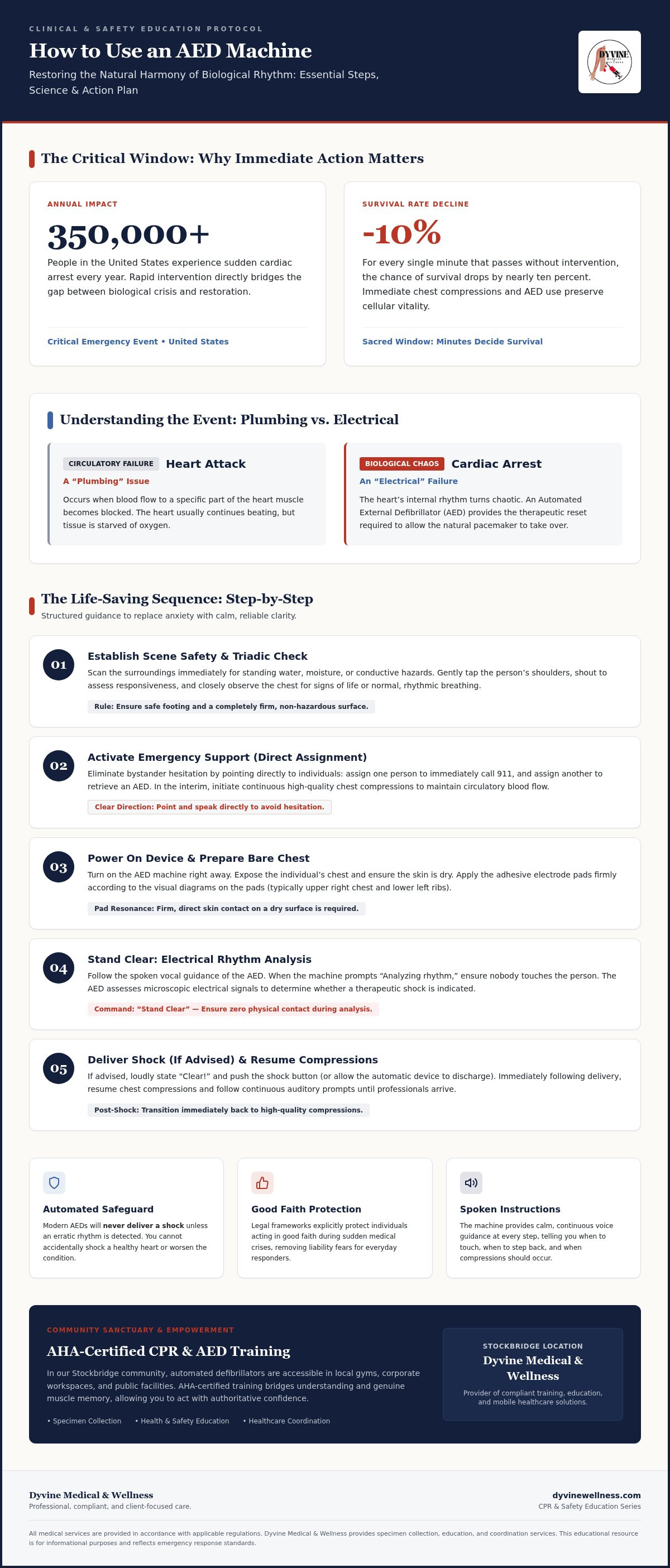
Every year, over 350,000 people in the United States experience a sudden cardiac arrest, and for every minute that passes without intervention, the chance of survival drops by nearly ten percent. It's completely natural to feel a surge of anxiety or a fear of doing something wrong when a life hangs in the balance. You might worry about when a shock is truly necessary or if you have the strength to act. At Dyvine Medical & Wellness, we believe your hands are vessels of healing. Learning how to use an AED machine is a sacred act of reclaiming the body's innate rhythm and protecting the vitality of your community.
You can move past the paralysis of uncertainty and step into a place of quiet, authoritative confidence. This guide provides a nurturing path to mastering the life-saving steps of an Automated External Defibrillator with professional clarity and supportive warmth. We will explore the essential protocols for 2026, including the precise way to apply pads, how to listen to the machine's vocal guidance, and where to find local AHA-certified training to ground your skills in real-world practice. By the end of this journey, you'll see the AED not as a cold piece of technology, but as a partner in restoring the natural harmony of life.
Table of Contents
Restoring the Rhythm: What is an AED Machine?
An Automated External Defibrillator (AED) is more than a piece of medical equipment; it's a bridge between a moment of crisis and a return to biological vitality. These automated external defibrillators are sophisticated, user-friendly devices specifically crafted to guide you through the process of supporting someone in sudden cardiac arrest. You don't need a medical degree to be a vessel of healing. By understanding how to use an AED machine, you embrace the power to restore natural harmony when the body's internal rhythm falters. The device is designed to speak to you, offering calm instructions that lead you through every breath and every step.
To better understand how these life-saving tools function in an emergency, watch this helpful demonstration:
Every minute is a sacred window. When the heart stops, the spark of life fades, and cellular health begins to decline. AEDs act as a compassionate guide, analyzing the heart’s electrical activity and determining if a therapeutic shock is required to reset the system. This reset allows the heart's natural pacemaker to reclaim its authority, inviting the pulse to return to its ancestral flow. This intervention is designed to be accessible to anyone, ensuring that fear never stands in the way of a life being saved.
The Science of Sudden Cardiac Arrest
It's essential to distinguish between a heart attack and cardiac arrest. A heart attack is a plumbing issue, where blood flow is blocked; cardiac arrest is an electrical failure, where the heart’s rhythm becomes chaotic. An AED intervenes at this microscopic level of biological health, providing the precise energy needed to silence the chaos. This intentional creation of a reset allows the body to return to its innate state of balance. It's the intersection where modern technology meets the body’s sacred electrical design, ensuring that the container of the spirit remains whole and vibrant.
Why AEDs are a Community Sanctuary
In our Stockbridge community, these devices are becoming a common sight in gyms, office buildings, and public parks. They transform these everyday spaces into safe harbors for our families and neighbors. Having an AED nearby is an invitation to protect your lineage and preserve the life stories of those around you. At Dyvine Medical & Wellness, we believe that empowering yourself with CPR and AED training is a vital component of a comprehensive wellness journey. It's about being prepared to act with grace, reliability, and love. All medical services are provided in accordance with applicable regulations. Dyvine Medical & Wellness provides specimen collection, education, and coordination services.
The Initial Response: Preparing the Body and the Scene
In the quiet intensity of an emergency, your first step is to establish a sanctuary of safety. Before you begin the process of understanding how to use an AED machine, look around. Is the ground wet? Is there conductive metal nearby? You must ensure both your safety and the safety of the individual whose life you are protecting. Once the space is secure, perform the triadic check. Gently tap the person's shoulders, shout to call them back to consciousness, and observe the chest for signs of life or rhythmic breathing. These few seconds of assessment are the foundation of your compassionate response.
If they don't respond, you must immediately activate the support network. Don't simply shout for help to the wind. Point to a specific person and say, "You, call 911," and "You, find an AED and bring it here." This directness prevents the bystander effect and ensures the tools for restoration arrive quickly. Until the device is at your side, high-quality chest compressions are the bridge that maintains biological vitality. You are physically circulating the life force through their sacred container, keeping their organs nourished until the rhythm can be restored.
Creating a Safe Space for Intervention
A successful intervention requires a firm, flat surface to optimize the depth of compressions and the resonance of the AED pads. If the person is on a soft bed or a wet surface, gently move them. Water and metal can divert the energetic path of the shock, which is why FDA guidance on public AED safety emphasizes clear environmental checks. Maintaining a calm, meditative focus helps you lead others through the chaos. Your steady presence is a safe harbor for the person in need, allowing the subsequent steps to unfold with precision.
The Power of Clear Communication
Vocalizing your actions isn't just for those around you; it's a tool to manage your own adrenaline. When you say, "I am starting compressions," or "I am opening the AED," you ground your mind in the present moment. This clarity keeps the process flowing without hesitation. For those who wish to practice these scenarios in a supportive environment, joining CPR classes in Stockbridge can turn these steps into second nature. By mastering these initial responses, you ensure that when you finally apply the device, you've already done the vital work of preparing the body for its return to rhythm. All medical services are provided in accordance with applicable regulations. Dyvine Medical & Wellness provides specimen collection, education, and coordination services. If you're ready to build this confidence, you can book your training session to start your journey toward becoming a certified guardian of your community.
Step-by-Step: How to Use an AED Machine with Confidence
When the AED arrives at the scene, treat its presence as a profound moment of support. Your first action is to press the power button to awaken the device. From this second forward, you're no longer acting alone. The machine will begin to speak, offering calm, auditory guidance that leads you through the restorative process. While the device powers up, you must prepare the person's chest, which we view as the sacred container of their life force. Use the scissors in the AED kit to expose the skin. It's vital to ensure the chest is dry; if it's wet, wipe it quickly with a towel or clothing. Optimal resonance and electrical flow depend on a clean, secure connection between the pads and the body.
Mastering how to use an AED machine requires you to listen as much as you act. The device is designed to be your partner in this journey, ensuring that every step you take is aligned with the needs of the individual. Dyvine Medical & Wellness provides specimen collection, education, and coordination services. If you feel a call to deepen your hands-on skills, you can book your training session with our AHA-certified guides in Stockbridge.
The Sacred Placement of AED Pads
Peel the backing from the pads one at a time and follow the visual diagrams provided on the device. Place one pad on the upper right side of the chest, just below the collarbone, and the other on the lower left side, beneath the armpit. This specific placement creates an electrical axis that "sandwiches" the heart, allowing the energy to flow directly through the cardiac muscle. For children under 8 years of age or weighing under 55 lbs, use pediatric pads if they're available. If you only have adult pads, the step-by-step AED instructions recommend an anterior-posterior placement, with one pad centered on the chest and the other on the back. If you encounter a pacemaker bulge or thick chest hair, place the pad at least an inch away from the device or use the provided razor to ensure the pad sticks firmly to the skin.
Following the Voice of the Machine
Once the pads are secure, the AED will command you to stop CPR so it can analyze the heart's rhythm. This is a vital moment of stillness. Ensure no one is touching the person. You can trust the internal logic of the device; it's physically incapable of delivering a shock unless it detects a lethal, shockable rhythm. If the machine announces "Shock Advised," shout "Clear!" and look to ensure everyone has stepped away before you press the shock button. If it says "No Shock Advised," it simply means the heart isn't in a state where electricity is the answer. In either case, resume high-quality chest compressions immediately after the prompt. Keeping the life-force moving through physical compressions protects the brain and organs until professional help arrives.
Common Concerns: Overcoming the Fear of 'Doing It Wrong'
Fear is a natural shadow that often follows us into high-pressure moments. You might worry that you'll make a mistake or that you aren't qualified to intervene. When you are learning how to use an AED machine, the most important thing to remember is that you cannot "misuse" the shock button. Modern devices are designed with profound intelligence. The machine will only deliver energy if it detects a specific, lethal electrical rhythm. If the heart doesn't need a shock, the button simply won't work. You are physically incapable of accidentally shocking someone who is merely sleeping or unconscious.
Another common anxiety involves the physical intensity of the rescue. You might hear a pop or feel a rib crack during chest compressions. While this can be startling, remember that a broken rib is a small price for a life restored to its natural rhythm. When someone collapses in cardiac arrest, they're already in a state of clinical death. You aren't "hurting" them; you are their only hope for reclamation. Your focus must remain on the biological vitality you're working to preserve, not the temporary fragility of the container.
Legal and Ethical Peace of Mind
In our Georgia community, the law stands as a shield for those who step forward in good faith. Under O.C.G.A. § 51-1-29.3, layperson responders are granted broad civil liability immunity when using an AED during an emergency. This legal protection is a sacred invitation to act without the paralyzing fear of litigation. Just as we prioritize Drug Testing Compliance to ensure professional workplace safety, these laws ensure our shared public spaces remain sanctuaries of mutual care. You're protected because our society values the courage it takes to protect a fellow human's lineage.
Technical Safety Features of Modern AEDs
The AEDs found in Stockbridge offices and community centers are remarkably self-sufficient. They perform daily and weekly self-tests to ensure their internal circuitry, software, and batteries are ready for a moment of crisis. These devices are equipped with sophisticated fail-safes that prevent accidental discharge. Even if you've never been taught how to use an AED machine before, the device's own internal logic prevents misuse. A beginner's willing heart and hands are exponentially better than no intervention at all. To truly silence these fears and build your confidence, we invite you to join our AHA Heartsaver classes where you can practice in a supportive, nurturing environment. Dyvine Medical & Wellness provides specimen collection, education, and coordination services.
Empowering Your Potential: AHA-Certified Training at DMW
Reading a guide is the first step toward reclaiming your power to protect those you love. However, the transition from knowledge to true mastery requires the physical resonance of hands-on practice. In a crisis, your body relies on muscle memory and the steady rhythm you've cultivated through experience. At Dyvine Medical & Wellness, we provide a safe harbor for this learning. Our AHA-certified instructors don't just teach you how to use an AED machine; they guide you into a state of preparedness where your response becomes an extension of your natural protective instinct. Mastery is found in the hands, the heart, and the breath.
Located in the heart of Stockbridge, we serve the vibrant communities of Henry County, Atlanta, and the surrounding regions. Our training center is a supportive environment where you can practice the sacred rhythm of CPR and AED use without the weight of judgment. We believe that every individual has the potential to be a vessel of healing. Our classes are designed to meet you exactly where you are, providing the convenience, professionalism, and reliability you deserve. Dyvine Medical & Wellness provides specimen collection, education, and coordination services.
Heartsaver vs. BLS: Which Path is Yours?
Choosing the right path for your certification depends on your specific role within the community and your personal goals for growth. We offer two primary pathways to help you achieve your goals:
AHA Heartsaver CPR/AED/First Aid: This course is an ideal invitation for families, teachers, and busy professionals. It focuses on the fundamental skills needed to act with confidence, compassion, and clarity in everyday settings.
AHA BLS Provider Course: This path is specifically designed for healthcare professionals and those who require high-level certification for their careers. It offers a deeper dive into the rhythmic complexities of professional resuscitation.
To find the session that aligns with your unique lifestyle or business needs, explore our CPR and Safety Training classes today.
Join the Dyvine Community of Healers
Your commitment to learning how to use an AED machine is a vital thread in a larger tapestry of holistic health. At DMW, our training fits seamlessly into a transformative journey that values the sanctity of the body as a temple. Many of our students find that pairing their safety certification with comprehensive wellness panels provides a complete picture of their biological vitality. This alignment between external preparedness and internal wellness creates a profound sense of peace. You become a certified guardian of your family's health and a reliable pillar for your organization. When you're ready to take control of your health with structured support, book your appointment or learn more today to begin your journey toward authentic wellness.
Embrace Your Role in Restoring Natural Harmony
You've journeyed through the steps of restoration and faced the fears that often cloud the path to action. By understanding how to use an AED machine, you've already begun the process of reclaiming your role as a conscious healer within your community. These devices are designed to be your supportive partner, offering clear guidance and fail-safe protections that ensure every intervention is a safe harbor for the individual in need. Whether you're a busy professional or a dedicated family member, your preparation is the thread that weaves a stronger safety net for those around you.
Mastery isn't found on a page; it's cultivated through the rhythmic practice of hands-on training. Our supportive environment in Stockbridge is a sanctuary where you can ground these skills in your muscle memory using local Henry County expertise. This is your sacred invitation to protect your lineage and preserve the life stories of your neighbors. Dyvine Medical & Wellness provides specimen collection, education, and coordination services.
Empower yourself with life-saving skills; Book your AHA CPR/AED Class in Stockbridge today. Your journey toward authentic wellness and community guardianship begins with this intentional step.
Frequently Asked Questions
Can I use an AED on a child or infant?
Yes, you can use these devices on children and infants with a gentle, protective touch. Most modern machines include pediatric pads or a key that reduces the energy for smaller bodies. If these aren't available, you should use adult pads without delay. Place one pad in the center of the chest and the other in the center of the back to ensure the heart is safely sandwiched within the restorative current.
What if I accidentally touch the person while the AED is shocking?
While the "Clear" command is a vital moment of stillness, accidentally touching the person during a shock is unlikely to cause you significant harm. You might feel a brief, startling sensation, but the device is designed to focus its energy on the individual's heart. To maintain the highest level of safety for everyone involved, always look and listen for the machine's prompts before the therapeutic energy is delivered.
Do I need to be certified to use an AED in an emergency in Georgia?
You don't need a formal certification to act as a vessel of healing in a Georgia emergency. State law protects lay rescuers who act in good faith to save a life. However, learning how to use an AED machine through an AHA-certified course at our Stockbridge center provides the instinctive confidence needed to lead with grace. Professional training transforms a frightening situation into a structured, manageable act of community service.
What should I do if the person has a pacemaker or a medication patch?
If you notice a pacemaker bulge under the skin, simply place the AED pad at least one inch away from the device. For medication patches, you must remove them and wipe the skin clean before applying the pads. These small adjustments ensure that the electrical path remains clear and the energy reaches the heart directly, respecting the body’s sacred container while providing the necessary intervention for life.
How often should AED pads and batteries be replaced?
Maintaining the biological vitality of your equipment is essential for long-term safety. AED pads and batteries generally require replacement every two to five years, though exact dates are marked on the supplies themselves. Regular checks of the device’s status indicator will give you peace of mind. Keeping these elements current ensures that the AED in your Stockbridge office or local gym is always ready to restore a natural rhythm.
Will the AED work if the person is lying on a wet surface?
An AED will work in wet conditions, but you must take intentional steps to ensure a safe environment. Move the person away from puddles and wipe their chest completely dry before applying the pads. Since water conducts electricity, these actions prevent the energy from scattering across the skin’s surface. This preparation ensures the shock travels through the heart with the resonance required to reset its electrical system effectively.
What happens if the AED says 'No Shock Advised'?
If the device announces that no shock is advised, it simply means the current heart rhythm won't respond to electricity. In this moment, your role is to resume high-quality chest compressions immediately to keep the life force moving. The AED will continue to monitor the individual's internal state and will prompt you to pause for another analysis every two minutes until professional medical help arrives at the scene.
Is it possible to shock someone whose heart is still beating normally?
It's physically impossible to shock someone whose heart is beating in a normal, healthy rhythm. The sophisticated computer inside the machine only activates its energy if it detects a lethal electrical failure. This built-in fail-safe is why learning how to use an AED machine is so empowering. You can act with the absolute certainty that you're only providing help when the body’s natural rhythm has been lost.


Comments